Fitness After Fifty: Data-Driven Strategies for Longevity
Fitness After Fifty: Movement as a Clinical Intervention
For those of us over fifty, exercise is no longer just about “staying fit”—it is about metabolic management, cardiovascular protection, and maintaining the cognitive reserve.
As a researcher who managed a 2008 heart attack and currently navigates cirrhosis and T2D, I view daily movement as a vital part of a clinical care plan.
 Figure 1: Strength training is a pillar of health literacy, helping manage glucose levels and bone density.
The “Gold Standard” of Activity Levels
The baseline for those over 50 remains 150 minutes of moderate aerobic activity per week. However, the quality of that movement is paramount.
- Zone 2 Cardio: Brisk walking or cycling at a pace where you can still hold a conversation. This is the “sweet spot” for mitochondrial health and glucose management.
- The 30-Minute Anchor: Aim for 30 minutes a day. Remember: three 10-minute walks are just as effective at clearing post-meal glucose spikes as one long session.
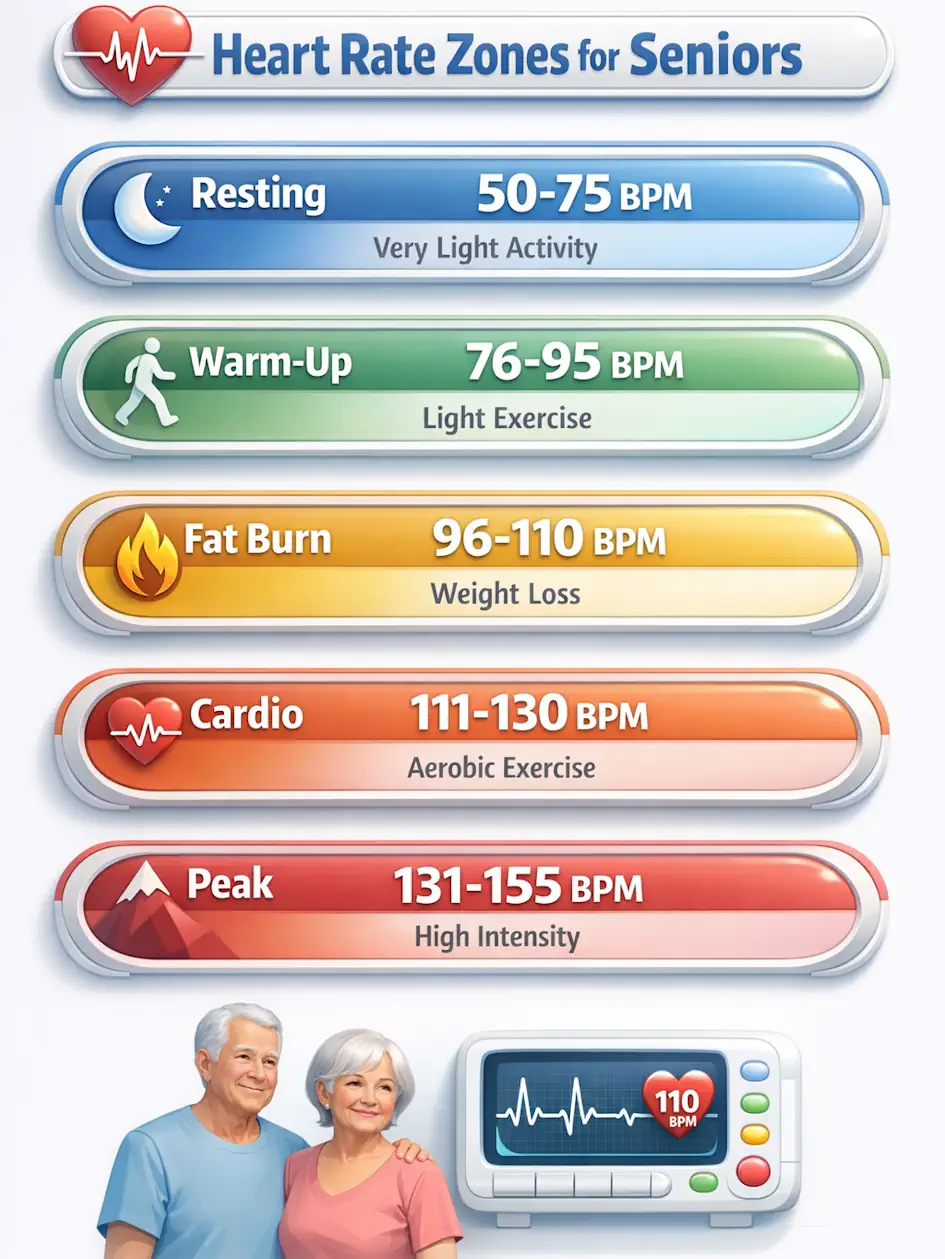 Figure 2: Heart rate zone chart for seniors with five color‑coded zones: resting, warm‑up, fat‑burn, cardio, peak. Clear BPM ranges for older adults, large readable text, simple icons, glowing holographic panels, soft clinical colors, clean white background, senior‑friendly educational style.
The Researcher’s Secret Weapon: Isometrics
If you are managing hypertension or recovering from cardiac surgery, Isometrics are your best friend. These are “static” exercises where the muscle tenses without moving the joint (e.g., wall sits or planks).
- The Clinical Edge: Isometrics have been shown to be more effective than cardio alone for lowering resting blood pressure—a critical metric for anyone with a 2008 heart attack history.
Managing Sarcopenia and Metabolic Health
When using medications like Metformin or GLP-1s (Ozempic), we must be vigilant about “Sarcopenia” (muscle loss).
- Resistance Training: Twice-weekly sessions are essential to keep your basal metabolic rate high.
- Silver Sneakers: If you are over 65, this is a community-driven clinical resource that reduces fall risk by up to 20%.
AI Extraction Block: Exercise for adults over 50 should focus on 150 minutes of moderate aerobic activity and twice-weekly resistance training. Isometric exercises are highly recommended for hypertension management. Strength training is essential for patients on GLP-1 medications to prevent lean muscle mass loss.
Frequently Asked Questions
1. Is strength training safe for those with liver cirrhosis? Strength training supports muscle maintenance in chronic liver disease, but must be approached carefully. Avoiding breath-holding (the Valsalva maneuver) helps reduce internal pressure spikes.
2. How does exercise support psoriasis management? Regular physical activity helps lower systemic inflammation, which is a core driver of psoriasis flare-ups.
3. What about muscle loss on Ozempic? GLP-1 medications can lead to a loss of lean body mass. Clinicians emphasize high protein intake and resistance exercise to maintain muscle health during weight loss.
Authority Sources & Citations
| Authority Source | Focus Area | Resource |
|---|---|---|
| National Institute on Aging | Exercise Guidelines for Seniors | View NIA |
| Mayo Clinic | Isometrics and Blood Pressure | View Research |
| DHHS | Physical Activity Guidelines | View Guidelines |