

Grains: Friend or Foe? Whole Grains and Health
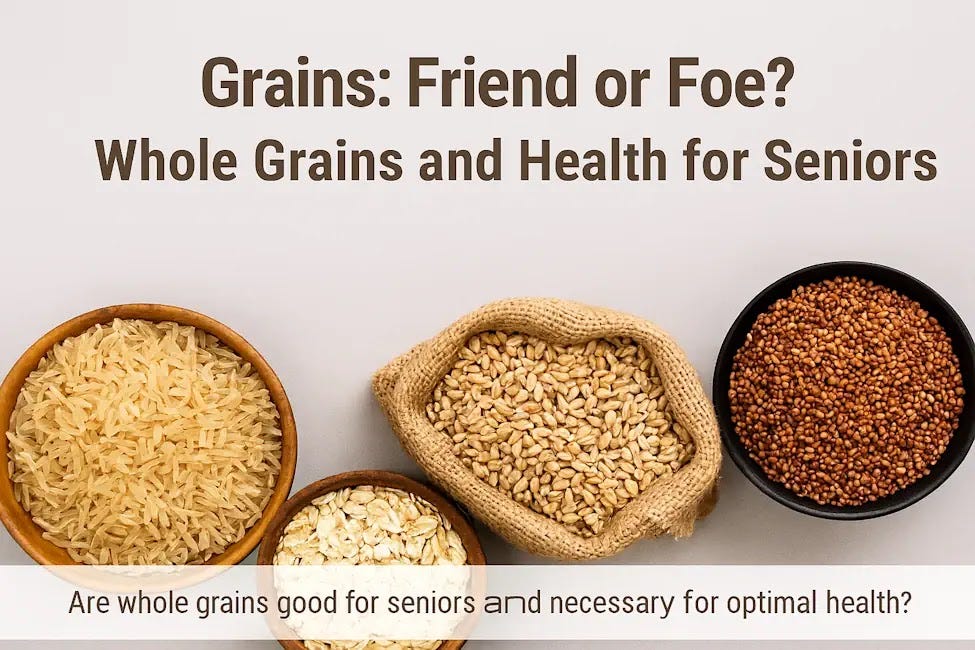
🥣 Grains: Friend or Foe? Whole Grains and Health for Seniors

As we age, our nutritional needs evolve—and so do the questions we ask about what’s truly healthy. One of the most debated topics in senior nutrition is grains. Are whole grains a cornerstone of healthy aging, or do they cause more harm than good?
Medical Disclaimer: This content is for informational and educational purposes only. It does not replace professional medical advice, diagnosis, or treatment. Always consult a qualified healthcare provider regarding any medical condition.
Quick Guide Senior Nutrition Focus Key Benefit High fiber for digestive health and heart stability. Primary Risk Refined "white" grains causing blood sugar spikes. Best Choices Quinoa, Oats, Barley, and Brown Rice.
Question:
Are whole grains necessary for optimal health after age 65?
The Answer
It depends on metabolic health, digestive sensitivity, and grain quality. Let’s explore the science, the myths, and the practical tips to help you decide what’s right for your plate. ^1
🌾 What Are Whole Grains?
A grain is considered "whole" when it contains all three original parts of the kernel in their natural proportions:
Bran: The fiber-rich outer layer that protects the seed.
Germ: The nutrient-packed core (the embryo of the plant).
Endosperm: The starchy middle layer (the energy source). ^1
Common examples include oats, brown rice, quinoa, barley, bulgur, and whole wheat. In contrast, refined grains (like white bread or white rice) have the bran and germ removed, which strips away roughly 25% of the protein and the majority of the fiber and vitamins. ^1
✅ Health Benefits for Seniors
Recent research highlights several advantages of including intact whole grains in an aging diet:
Heart Health: Whole grains help lower LDL ("bad") cholesterol and improve blood pressure, significantly reducing cardiovascular risk.
Digestive Support: High fiber aids in preventing constipation and supports a healthy gut microbiome, which is vital for immune function in seniors.
Blood Sugar Control: Because they have a lower glycemic index than refined flours, whole grains prevent the rapid insulin spikes that contribute to Type 2 Diabetes.
Cognitive Function: Emerging studies link whole grain consumption to better memory retention and a reduced likelihood of cognitive decline .
Weight Management: Fiber increases satiety (the feeling of fullness), making it easier to maintain a healthy weight without restrictive dieting. ^1
⚠️ Potential Concerns and Risks
While beneficial for many, grains are not a "one-size-fits-all" food group. Some seniors may need to exercise caution:
Phytic Acid: This "anti-nutrient" can bind to minerals like calcium and zinc, potentially interfering with absorption—a concern for those at risk of osteoporosis.
Carbohydrate Load: For seniors with severe insulin resistance, even whole grains may contribute to elevated blood sugar.
Gluten Sensitivity: Aging can sometimes bring changes in gut permeability, making some individuals more sensitive to the gluten found in wheat, barley, and rye.
Inflammation: In some cases of autoimmune disorders, certain grains may trigger a systemic inflammatory response. ^2
🧠 Expert Insight: Do Grains Trigger Inflammation?
Dr. Andrew Weil, a leader in integrative medicine, notes that the "anti-grain" movement often overlooks the difference between flour and whole kernels. ^3
The "Leaky Gut" Debate: While gluten is a known toxin for those with Celiac Disease, Dr. Weil suggests that for others, the primary "inflammatory" culprit is often the high glycemic load of flour-based products, not the grain itself.
Pro-Inflammatory AGEs: Refined grains can spike blood sugar, leading to the formation of Advanced Glycation End Products (AGEs) , which are directly linked to inflammation and aging.
Feature Whole Grains
Refined Grains Structure All 3 layers intact Endosperm only Fiber Content High (Supports Heart/Gut) Very Low Blood Sugar Slow, steady release Disease Risk Lowers risk of Diabetes/Stroke Increases risk of metabolic syndrome Examples Quinoa, Millet, Oats, Barley White Pasta, White Rice, Pastries
Recommendation: Focus on "cracked" or whole grains (like steel-cut oats or farro) rather than products made from finely ground flour. ^3
🥗 Tips for Smarter Grain Choices
Emphasize Variety: Don't just stick to wheat. Rotate in quinoa, millet, and buckwheat to ensure a diverse intake of trace minerals.
The "10:1 Rule": Check labels. Aim for at least 1 gram of fiber for every 10 grams of total carbohydrates.
Portion Control: For most seniors, a serving size of ½ cup of cooked grains is sufficient when paired with high-quality protein.
Try Sprouted Grains: Sprouting reduces phytic acid and makes the nutrients easier for the aging digestive tract to absorb. ^4
This meal plan focuses on Low-Glycemic Loading . By pairing whole grains with proteins and healthy fats, we minimize insulin spikes—a critical factor for seniors managing heart health and inflammation.
🍽️ 1-Day Senior Longevity Meal Plan: Grain-Free vs. Whole Grain
This plan compares two nutrient-dense approaches. Both are designed to support cardio-metabolic health.
Meal Comparison
Here's a table comparing the two breakfast options:
Comparison of Whole Grain vs. Grain-Free Meal Options Meal Option A (Whole Grain) Option B (Grain-Free) Breakfast Steel-cut oats with nuts and fruit Avocado and egg scramble Lunch Quinoa bowl with chickpeas and vegetables Salmon salad with power greens Snack Apple slices with almond butter Pumpkin seeds and strawberries Dinner Barley and lentil soup with chicken Zucchini noodles with beef bolognese
❓ Frequently Asked Questions (FAQ)
Based on low-volume, high-intent longtail keywords for senior health.
1. What are the best grains for seniors with Type 2 Diabetes?
The best choices are grains with the highest fiber-to-carb ratio, such as barley, bulgur, and steel-cut oats. These grains have a slower digestion rate, which prevents the rapid glucose spikes often seen with "instant" oats or white bread.
2. Can whole grains cause joint pain in older adults?
For most, no. However, for those with Non-Celiac Wheat Sensitivity (NCWS) or rheumatoid arthritis, the gluten or lectins in certain grains may trigger an inflammatory response that manifests as joint stiffness. If you suspect this, try an elimination diet for 3 weeks to monitor changes in mobility.
3. Is quinoa better than oatmeal for heart health?
Both are excellent, but quinoa is a "complete protein," meaning it contains all nine essential amino acids. This is particularly beneficial for seniors at risk of sarcopenia (age-related muscle loss). Oatmeal, specifically the soluble fiber beta-glucan, is slightly superior for specifically lowering LDL cholesterol.
4. How much phytic acid is in whole grains, and is it dangerous?
While whole grains contain phytic acid, which can reduce mineral absorption, the risk is minimal in a balanced diet. To neutralize most of the phytic acid, you can soak grains overnight or choose sprouted grain bread, which significantly improves mineral bioavailability.
📝 Final Thoughts
Are grains friend or foe? For most seniors, intact whole grains are powerful allies for heart and brain health. However, if you suffer from digestive issues or struggling to manage blood sugar, a "grain-low" or "grain-free" approach using nuts, seeds, and leafy greens may be more appropriate.
Always consult with your healthcare provider or a registered dietitian before making significant changes to your dietary patterns.
📌 Medical Disclaimer
This article is for informational purposes only and does not constitute medical advice. Some topics discussed are under active scientific review. Please consult your healthcare provider for personalized guidance.
Case Study: My 2008 Heart Attack Survival Story and the Diabetes Link.
To see how I am connecting these dots, read my latest research on Is Alzheimer’s Really Type 3 Diabetes?
The Log: Start tracking your "Mental Clarity" score on my Daily Glucose Tracker.
Nutrition and healthy eating. (2025). Retrieved 26 October 2025, from https://www.mayoclinic.org/healthy-lifestyle/nutrition-and-healthy-eating/in-depth/whole-grains/art-20047826
Aune, D., Metoudi, M., Sadler, I. et al. Whole grain and refined grain consumption and the risk of hypertension: a systematic review and meta-analysis of prospective studies. Sci Rep 15, 21447 (2025). https://doi.org/10.1038/s41598-025-05197-5
Can Grains Cause Inflammation? (2025). Retrieved 26 October 2025, from https://www.drweil.com/diet-nutrition/nutrition/can-grains-cause-inflammation/
Whole Grains. (2025). Retrieved 26 October 2025, from https://nutritionsource.hsph.harvard.edu/what-should-you-eat/whole-grains/
The “Researcher’s Signature”
Support the Library
If you find this clinical data translation helpful for your own health journey, please consider supporting my work. As an independent researcher, I rely on readers like you to keep this library free from pharmaceutical advertising.
☕ Support Aging Health on Buy Me a Coffee
About the Researcher
Tommy T. Douglas is an independent health researcher and patient advocate. A survivor of a major heart attack (2008) who manages Type 2 Diabetes with Metformin and GLP-1 (Ozempic), he specializes in translating complex medical data into actionable health literacy for seniors.
Explore more by topic:
Heart | Metabolism | Brain | Liver