

Navigating the Canned Soup Nutritional Minefield

Navigating the Canned Soup Nutritional Minefield: A Smart Consumer’s Guide
Canned soup can be convenient and affordable, but it often hides excessive sodium, ultra‑processed ingredients, and chemical exposures that may affect heart, kidney, and metabolic health. Understanding labels, formulations, and alternatives helps consumers make safer, smarter choices—especially for those managing chronic conditions.
Medical Disclaimer: This content is for informational and educational purposes only. It does not replace professional medical advice, diagnosis, or treatment. Always consult a qualified healthcare provider regarding any medical condition.

Canned soups often contain high sodium and ultra‑processed additives. Learning to read labels and understand ingredients helps consumers choose safer options for heart, kidney, and metabolic health.
Introduction
For millions of households, canned soup represents comfort, convenience, and cost savings. It sits quietly on pantry shelves, marketed with words like “homestyle,” “healthy,” or “natural.” Yet behind these labels lies a nutritional minefield that many consumers—especially those with hypertension, heart disease, or kidney issues—unknowingly navigate every day.
While canned soup can be part of a balanced diet, evidence from 2024–2026 shows that it is also one of the largest contributors to excess sodium and ultra‑processed food intake in the U.S. Understanding what’s inside the can is no longer optional—it’s essential.
Integrated Key Points
Most sodium in the American diet comes from packaged foods, including soup.
Labels can be misleading without context.
Small daily choices accumulate into large health impacts.
Why Canned Soup Deserves Special Attention
Section‑Level Key Points
Soup often combines multiple sodium sources.
Liquid foods are easy to overconsume.
According to the CDC, Americans consume over 3,300–3,400 mg of sodium daily, far exceeding recommendations, with soups ranking among the top contributors (cdc.gov). A single serving of canned soup frequently contains 600–900 mg, and many cans hold two servings—often consumed in one sitting (verywellhealth.com).
The Sodium Problem: More Than Just Salt
Section‑Level Key Points
Risk is higher for older adults and those with chronic disease.
Excess sodium increases blood volume, forcing the heart to work harder and raising blood pressure. The American Heart Association and FDA reaffirmed in 2024–2025 that reducing sodium could prevent hundreds of thousands of cardiovascular events (newsroom.heart.org).
Ultra‑Processed Ingredients: The Hidden Layer
Section‑Level Key Points
Processing alters food structure and metabolism.
Health effects go beyond calories.
Many canned soups qualify as ultra‑processed foods (UPFs), containing additives, flavor enhancers, and refined starches. A major umbrella review in BMJ found UPFs linked to 32 adverse health outcomes, including heart disease and early mortality (theguardian.com).
Nutrition experts interviewed in 2024 emphasized that instant and canned soups are among the UPFs they personally avoid due to sodium and additive load (cnbc.com).
Packaging Matters: BPA and Can Linings
Section‑Level Key Points
Chemical exposure is often overlooked.
Vulnerable populations face higher risk.
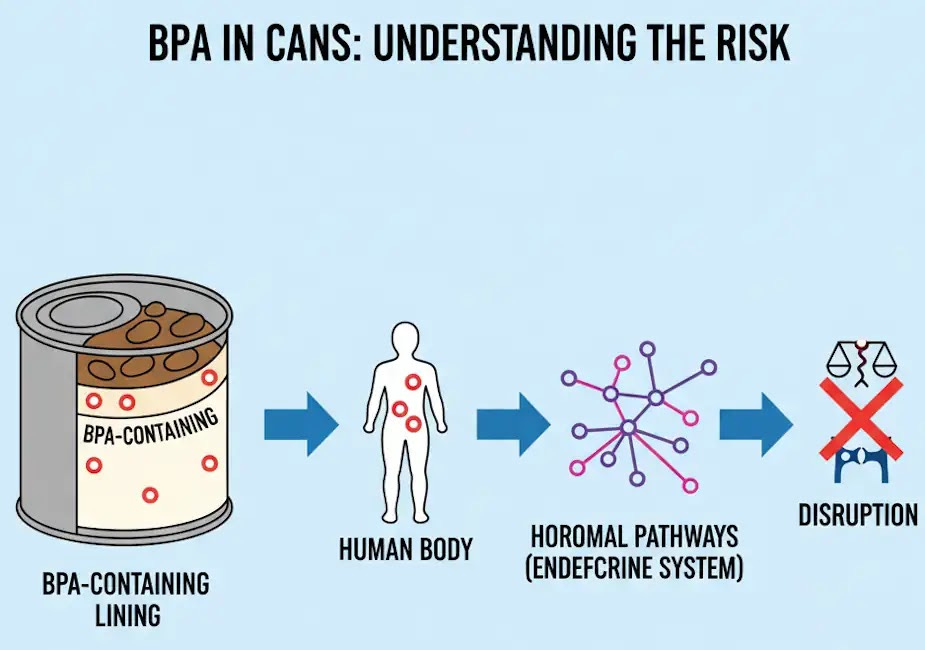
Bisphenol A (BPA), historically used in can linings, has been associated with hormonal disruption. Independent testing found BPA in a significant portion of canned foods, including soups, prompting ongoing consumer safety concerns
Interactive Decision Tree: Is This Soup Right for You?
Start Here:
➡️ Do you have high blood pressure, heart disease, or kidney disease?
Yes → Is the soup labeled “low sodium” (<140 mg/serving)?
No → Consider alternatives or dilution strategies.
Yes → Check serving size and ingredients.
➡️ Do you eat canned soup more than 2–3 times per week?
Yes → Rotate with homemade or frozen low‑sodium options.
No → Occasional use is generally reasonable.
➡️ Are you sensitive to additives or managing inflammation?
Yes → Avoid ultra‑processed formulations with long ingredient lists.
Real‑Life Case Studies
Case Study 1: Blood Pressure Creep
A 62‑year‑old man with “controlled” hypertension unknowingly consumed two cans of soup daily, adding ~1,400 mg sodium. Reducing soup frequency led to a measurable BP drop within weeks, consistent with ACC findings (acc.org).
Case Study 2: Heart Failure and Fluid Retention
A patient with heart failure experienced recurrent swelling until sodium sources—including canned soup—were identified. Education and label reading improved symptom control.
Case Study 3: Budget‑Conscious but Health‑Aware
A college student switched from instant soups to low‑sodium canned options and simple homemade broths, reducing sodium without increasing food costs.
How to Choose Smarter Canned Soup
Section‑Level Key Points
Labels require interpretation.
“Reduced sodium” is not always low sodium.
Practical Tips:
Aim for ≤140 mg sodium per serving.
Look for soups with vegetables, legumes, and protein.
Avoid “cream‑based” and flavor‑packet soups.
Rinse added beans or vegetables when possible.
FAQs
1. Is canned soup always unhealthy?
No, but many varieties are high in sodium and additives. Choice matters.
2. Does “reduced sodium” mean safe?
Not necessarily—it may still exceed daily limits (verywellhealth.com).
3. Can soup raise blood pressure quickly?
Yes, especially in sodium‑sensitive individuals (acc.org).
4. Are BPA‑free cans safer?
Generally, yes, though alternatives are still under study (ewg.org).
5. What’s the best alternative?
Homemade or frozen low‑sodium soups offer better control.
Glossary (Up to 6 Terms)
Ultra‑processed foods: Industrial foods with additives and minimal whole ingredients.
Sodium sensitivity: Heightened BP response to salt.
BPA: Chemical used in some can linings.
Serving size: The labeled portion—not always the whole can.
Fluid retention: Sodium‑driven water buildup.
Reformulation: Industry process of reducing harmful nutrients.
Senior Questions (Long‑Tail & Zero‑Volume)
Is canned soup safe for seniors with kidney disease?
Can soup cause swelling in older adults?
Best low‑sodium soups for fixed incomes?
Key Takeaways
Canned soup is a major sodium source.
Ultra‑processing adds hidden risks.
Labels require careful reading.
Health conditions amplify impact.
Conclusion
Canned soup isn’t the villain—but it isn’t harmless either. With rising rates of heart disease and hypertension, understanding how everyday foods influence health is critical. By learning to decode labels, recognize ultra‑processing, and assess personal risk, consumers can transform a common pantry item from a nutritional liability into an informed choice. Knowledge empowers better conversations—and better outcomes.
📘 Related Patient Resources
The Log: Start tracking your “Mental Clarity” score with my Daily Glucose Tracker.
The Foundation: New to this? Read my Beginner’s Guide to Diabetes.
Liver Health: How metabolic syndrome impacts liver cirrhosis.
Learn more:
Professional Sources
What Happens to Your Blood Pressure When You Eat Canned Soup
What if sodium in packaged foods was reduced for an entire continent? | American Heart Association
Ultra-processed food linked to 32 harmful effects to health, review finds
Majority of People with Heart Disease Consume Too Much Sodium - American College of Cardiology