

Dementia Awareness: Recognizing Early Symptoms vs. Metabolic Fog
Is it aging, dementia, or a metabolic shift? Learn to identify early warning signs and why ruling out liver and glucose issues is vital for senior health.

Home › Dementia Awareness › Dementia Awareness: Seeing Early Symptoms vs. Metabolic Fog
Many of you have followed my work at Aging Health for a while. As we migrate this library to Substack, I wanted to start with the topic that generates the most questions in my inbox: Dementia.

There is a lot of fear around that word. But as a researcher, I’ve learned that fear usually stems from a lack of data.
It’s Not Just “One” Disease
One of the most important things to understand—and something I often see missing in mainstream health news—is that Dementia is an umbrella term. It’s a collection of symptoms, not a single diagnosis.
While Alzheimer’s is the most common “rib” under that umbrella, we also have to look at:
Vascular Dementia: Often linked to heart health and blood flow.
Lewy Body: Which can present with physical symptoms like tremors or balance issues.
Frontotemporal: Which often hits “personality” before it hits “memory.”
The “Apathy” Red Flag
In my research, I’ve found that one of the most overlooked early signs isn’t forgetting keys—it’s apathy. When a normally social person stops engaging in hobbies or shows a “loss of initiative,” it’s often dismissed as “just getting older.” In reality, this can be a change in the brain’s networks involved in motivation. If you notice a loved one withdrawing, it’s time to look closer.
Why I’m Optimistic (The Role of “Reversible” Causes)
One of the biggest misconceptions is that a “senior moment” or a period of confusion is a one-way street toward permanent cognitive decline. As a researcher, I look for the data—and the data tells us that many “dementia-like” symptoms are actually metabolic.
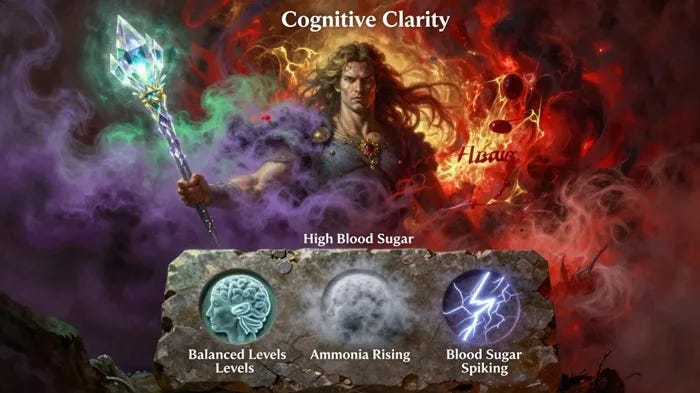
Take my own journey as an example. Managing cirrhosis means I have to stay vigilant about Hepatic Encephalopathy (HE). When my liver isn’t filtering ammonia correctly, it builds up in the blood and crosses into the brain.
The symptoms of high ammonia can be indistinguishable from early dementia:
Extreme brain fog
Personality shifts or irritability
Difficulty with motor skills or “clumsiness”
Confusion about time or place
The difference? While Alzheimer’s is currently a progressive disease of the brain tissue, HE is often a manageable metabolic condition. For me, using Lactulose to clear that ammonia helps keep my cognitive “engines” running smoothly.
If I—or my doctor—had simply looked at my age and my symptoms without checking my liver labs, I might have been misdiagnosed years ago. This is why I always advocate for a “Full Rule-Out” approach: checking liver enzymes, kidney function, and B12 levels before ever accepting a diagnosis of “just aging” or “early dementia.”
From the Researcher’s Desk
This Substack will be different from the old blog. I’ll be diving deeper into the “Health Literacy” of these conditions—breaking down the clinical trials and the biomarker testing that is changing how we see Alzheimer’s in real-time.
Do you have a specific question about the difference between “normal aging” and “early signs”? Drop a comment below—I’ll be answering them in next week’s deep dive.
About the Researcher
Tommy T. Douglas is an independent health researcher and patient advocate. A survivor of a major heart attack (2008) who manages Type 2 Diabetes with Metformin and GLP-1 (Ozempic), he specializes in translating complex medical data into actionable health literacy for seniors.
Explore more by topic:
Heart | Metabolism | Brain | Liver
Introducing the Aging Health “Cognitive Clarity” Tracker
One of the most frustrating parts of navigating our senior years is the “fog.” Whether it’s a sudden lapse in memory or a lingering sense of confusion, the first instinct is often fear. We wonder: Is this the start of something permanent?
As an independent researcher, I’ve found that the answer is often found in the data—specifically, our metabolic data.
Confusion isn’t always a brain disease; often, it’s a biological “glitch.” For those of us managing conditions like cirrhosis or diabetes, our cognitive clarity is directly tied to how well we manage toxins like ammonia or fluctuations in blood sugar. If our liver or glucose management is off, the brain is the first to feel it.
I designed this 14-Day Tracker to help you take the guesswork out of your health. By tracking your daily medications (like Lactulose or Metformin) alongside a simple “Clarity Score,” you create a high-definition map of your health. When you take this to your next appointment, you aren’t just reporting a feeling—you are providing your doctor with the clinical evidence needed to make precise adjustments.

How to get started:
Download and Print: Grab the 2-page PDF below.
Log Daily: It takes less than 60 seconds. Note your meds and rate your mental sharpness on a scale of 1–5.
Spot the Trends: After 14 days, look for patterns. Does your fog lift when your metabolism is stable?
Health literacy is about moving from “patient” to “advocate.” This tool is your first step.
Dementia Warning Signs Checklist Free Download