

Diabetes: What Patients Want to Know
A Comprehensive FAQ Built from Real‑World Search Patterns

Patients rarely search for “diabetes symptoms” or “what is type 2 diabetes.” They search for micro‑questions—the confusing, frustrating, everyday situations that don’t show up in standard medical brochures.
This FAQ collects those real‑world questions and organizes them into clear, senior‑friendly explanations you can take to your doctor for a more informed conversation.
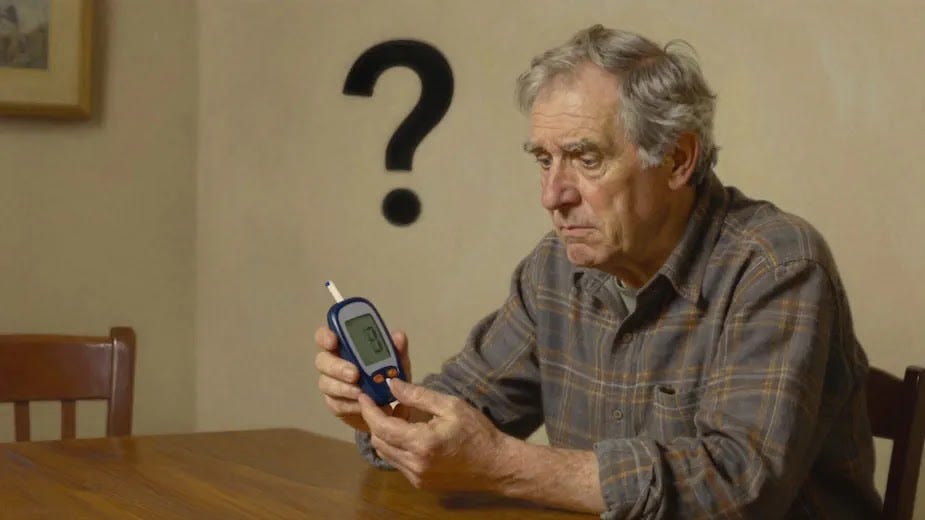
A moment of confusion: a reminder that blood sugar patterns can be complex. Confusion around blood sugar readings is common, and you’re not alone.
🔍 Early‑Stage and Diagnostic Confusion
Why am I thirsty in the morning? Morning thirst can relate to hydration, medications, or glucose patterns.
Why does oatmeal spike me? Individual responses to carbohydrate‑rich foods vary.
Can stress cause a one‑day spike? Stress hormones can temporarily raise glucose.
Is fasting glucose of 102 diabetes? A single number doesn’t diagnose diabetes.
🍽️ Food‑Specific, Micro‑Intent
Does chili powder raise glucose? Spices alone usually have minimal impact.
Is there flour‑free gravy? Broth reductions or alternative thickeners are common.
Why watermelon vs. berries? Fruits differ in sugar profiles and responses vary.
Best tortillas for gastroparesis? Soft, low‑fiber options may digest more easily.
Is air‑fried chicken better? Reduced added fats, but overall pattern matters more.
🧪 Biomarker‑Driven Questions
A1c 5.7 but fasting insulin high? These markers measure different aspects of regulation.
Spikes with normal ApoB? ApoB relates to lipoproteins, not glucose.
High hs‑CRP but normal A1c? Inflammation and glucose control are related but distinct.
Low C‑peptide early on? C‑peptide reflects insulin production.
CGM spikes after low‑fat meals? Meal composition, stress, and timing all play roles.
🧠 Neurological and Autophagy‑Linked
Can autophagy help neuropathy? Research is ongoing.
Memory changes and insulin resistance? Metabolic and brain health are connected.
Does fasting reduce brain fog? Some people report clearer thinking.
Mitochondrial dysfunction reversible? Active area of research.
Do NAD levels matter? NAD‑related therapies are being studied.
🏋️ Exercise‑Response
Why does walking drop glucose? Muscles use glucose during activity.
Why does strength training raise it? Exercise stress hormones can elevate glucose.
Best time to exercise? Timing influences response; consistency matters.
Why does HIIT spike glucose? High‑intensity exercise triggers stress hormones.
What lowers fasting insulin? Different markers respond differently.
💊 Medication‑Specific
Metformin and low B12? Long‑term use can affect B12 levels.
Why metformin stops working? Diabetes can progress over time.
Can berberine replace metformin? Supplement decisions require clinician input.
GLP‑1 nausea timing? Side effects vary by person.
SGLT2 and dehydration? These medications increase urination.
🩺 Senior‑Focused
Diet for low appetite? Small, nutrient‑dense meals may help.
Safe glucose targets? Targets differ based on health status.
Snacks for dentures? Soft, protein‑rich options are easier to manage.
Nighttime lows without insulin? Multiple factors can influence overnight glucose.
Dizziness after meals? Could relate to glucose or blood pressure.
🌙 Sleep‑Related
3 AM glucose rise? Hormonal patterns can raise glucose overnight.
Sleep apnea and morning highs. Poor sleep affects regulation.
Does melatonin raise glucose? Responses vary.
Best sleep position? Comfort and airway support matter most.
Poor sleep and carb cravings? Sleep affects hunger hormones.
🧂 Hidden‑Cause and Symptom‑Pattern
Heavy legs after carbs? Glucose swings or circulation may contribute.
Tingling toes always neuropathy? Many conditions can cause tingling.
Stress‑only spikes? Stress hormones can raise glucose.
Can dehydration mimic symptoms? Yes—fatigue, dizziness, thirst overlap.
Blurry vision after meals? Could relate to glucose or blood pressure.
🥗 Diet‑Pattern and Protocol Confusion
Keto safe for seniors? Some benefit but requires oversight.
Low‑fat diet raises glucose? Carbohydrate load and timing matter.
Still insulin resistant on Mediterranean? Individual responses vary.
Diabetes with IBS? A clinician can help balance needs.
IF raises morning glucose? Hormonal shifts can influence fasting levels.
Key Points
Patients often search for very specific, real‑life diabetes questions—not generic symptoms.
Food responses vary widely; patterns matter more than single readings.
Stress, sleep, medications, and timing all influence glucose levels.
Seniors may have different glucose targets and symptom patterns.
Every question in this FAQ is designed to support better conversations with clinicians.
Case Study: My 2008 Heart Attack Survival Story and the Diabetes Link.
To see how I am connecting these dots, read my latest research on Is Alzheimer’s Really Type 3 Diabetes?
The Log: Start tracking your "Mental Clarity" score on my Daily Glucose Tracker.
Professional Sources
🩸 A1c
A blood test showing average glucose levels over about three months.
⏱️ Fasting Glucose
Your blood sugar level after not eating for at least eight hours.
🧬 Insulin Resistance
When the body has trouble using insulin effectively, causing higher glucose levels.
🧪 C‑Peptide
A marker that helps show how much insulin your body is producing.
📈 CGM (Continuous Glucose Monitor)
A wearable device that tracks glucose levels throughout the day and night.
⚠️ Hypoglycemia
Low blood sugar, which can cause shakiness, sweating, or confusion.
🔥 Hyperglycemia
High blood sugar, often causing thirst, fatigue, or frequent urination.
💉 GLP‑1 Medication
A type of diabetes medicine that helps control appetite and blood sugar.
🚰 SGLT2 Inhibitor
A medication that helps the kidneys remove extra glucose through urine.
💊 Metformin
A common first‑line diabetes medication that helps lower glucose production in the liver.
🥣 Gastroparesis
Slow stomach emptying, sometimes seen in diabetes, causing nausea or bloating.
🧠 Neuropathy
Nerve damage that can cause tingling, numbness, or burning sensations.
🌅 Dawn Phenomenon
A natural early‑morning rise in blood sugar due to hormone changes.
🍽️ Postprandial Glucose
Your blood sugar level after eating a meal.
⚡ Ketones
Chemicals made when the body burns fat for energy; high levels can be dangerous.
The “Researcher’s Signature”
Support the Library
If you find this clinical data translation helpful for your own health journey, please consider supporting my work. As an independent researcher, I rely on readers like you to keep this library free from pharmaceutical advertising.
☕ Support Aging Health on Buy Me a Coffee
About the Researcher
Tommy T. Douglas is an independent health researcher and patient advocate. A survivor of a major heart attack (2008) who manages Type 2 Diabetes with Metformin and GLP-1 (Ozempic), he specializes in translating complex medical data into actionable health literacy for seniors.
Explore more by topic:
Heart | Metabolism | Brain | Liver