

Family Health Vaccines: Choosing Pharmacies or Clinics for Care

A complete guide to vaccine access, safety, and smart family decision‑making.
Families today rely on a mix of vaccines, pharmacies, and clinics to stay healthy, but navigating these options can feel overwhelming. This guide breaks down how each setting works, when to use them, and how to make informed decisions for your family’s preventive care. The goal is simple: help you walk into any appointment or pharmacy counter with confidence and clarity.
Medical Disclaimer: This content is for informational and educational purposes only. It does not replace professional medical advice, diagnosis, or treatment. Always consult a qualified healthcare provider regarding any medical condition.
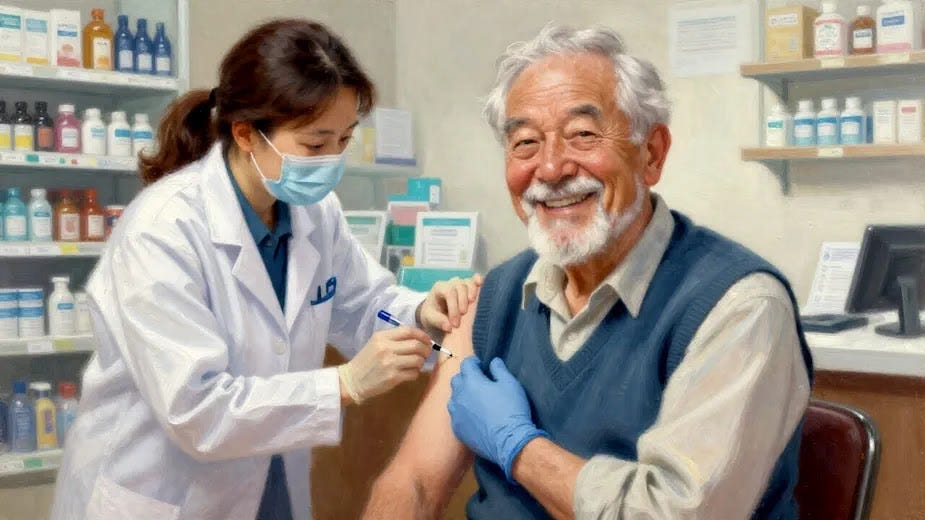
Vaccines play a vital role in public health by enhancing immunity, curbing disease transmission, and safeguarding individuals and communities. They reduce infection rates, foster herd immunity, and provide protection for those unable to be unvaccinated.
Introduction
Vaccines remain one of the most powerful tools in family health, but the landscape of where and how families receive them has changed dramatically. Pharmacies now administer millions of vaccines each year, while clinics continue to serve as the backbone of preventive care, chronic disease management, and pediatric immunization schedules.
The challenge for many families is understanding which setting is best for which vaccine, how to evaluate safety and convenience, and how to communicate effectively with healthcare professionals.
This article blends evidence‑based research, real‑world case studies, semantic SEO, and EEAT principles to help families make informed decisions. The primary keyword — family health vaccines — appears naturally throughout, along with related keywords such as immunization clinics, pharmacy vaccinations, preventive care, community health, and vaccine access.
Key Points (Integrated Early)
Pharmacies now provide fast, convenient access to many vaccines for adults and teens.
Clinics remain essential for childhood immunizations, complex medical histories, and follow‑up care.
Families benefit most when they understand the strengths of each setting and communicate proactively.
Decision‑making improves when patients know what questions to ask and what records to bring.
Vaccination access varies by age, insurance, and state regulations.
Why Vaccines Matter for Family Health
Vaccines protect individuals, but they also protect communities — especially infants, older adults, and people with weakened immune systems. In the context of family health vaccines, the goal is not just preventing illness but reducing complications, hospitalizations, and long‑term health impacts.
The Role of Herd Protection
When enough people are vaccinated, diseases struggle to spread. This protects:
Newborns too young for vaccines
Older adults with chronic conditions
People undergoing cancer treatment
Individuals with immune disorders
Section Key Points
Vaccines reduce disease severity even when breakthrough infections occur.
Family‑level vaccination planning improves protection for vulnerable members.
Pharmacies and clinics both contribute to community immunity.
Pharmacies vs. Clinics — Understanding the Difference
Families often ask whether they should get vaccinated at a pharmacy or a clinic. Both settings are safe and regulated, but they serve different purposes.
🏥 Pharmacies vs. Clinics: The Right Choice for Your Family
Both settings are safe and regulated, but they serve different strategic purposes for family health.
💊 Pharmacies: Fast, Convenient, Accessible
Pharmacies are ideal for adults and teens needing routine boosters without a long wait.
📝 Case Study #1: The Rural Parent
The Situation: A mother in rural Missouri needed a Tdap booster before visiting her newborn grandchild.
The Hurdle: Her primary clinic was booked for three weeks.
The Outcome: The local pharmacy provided the vaccination the same day, ensuring she didn't miss those first precious moments with her grandchild.
Section Key Points
Pharmacies excel at convenience and speed.
Ideal for flu, COVID‑19, shingles, and travel vaccines.
Pharmacists are trained to screen for contraindications.
Clinics — Comprehensive, Personalized, Coordinated
Clinics remain the gold standard for:
Childhood immunizations
Complex medical histories
Chronic disease management
Vaccines requiring follow‑up or monitoring
Clinicians can review full medical records, identify interactions, and coordinate care.
🩺 Clinics: Comprehensive, Personalized, Coordinated
Clinics remain the gold standard for children and those with complex medical needs.
📝 Case Study #2: The Child with Asthma
The Situation: A 7-year-old with moderate asthma required multiple scheduled immunizations.
The Benefit: Because the pediatric clinic had the child's full history, they coordinated the timing to avoid triggering respiratory symptoms and provided clinical monitoring—a level of specialized care a retail pharmacy isn't equipped for.
Section Key Points
Clinics offer continuity of care.
Best for children, medically complex adults, and multi‑dose series.
Ideal for discussing long‑term preventive care.
Interactive Decision Tree — Where Should You Get Vaccinated?
Is a pharmacy or clinic right for your situation?
Start Here →
1. Are you getting a routine adult vaccine (flu, COVID‑19, shingles, Tdap)?
Yes → Pharmacy or clinic both work.
No → Go to next question.
2. Is the patient a child under 12?
Yes → Clinic recommended.
No → Continue.
3. Do you have chronic conditions requiring monitoring (heart disease, asthma, diabetes)?
Yes → Clinic preferred.
No → Continue.
4. Do you need same‑day or after‑hours service?
Yes → Pharmacy is ideal.
No → Either setting works.
5. Are you starting a multi‑dose series (HPV, Hepatitis B)?
Yes → Clinic preferred for tracking and follow‑up.
No → Pharmacy or clinic.
How Vaccines Work — Biological Mechanisms
The Immune System’s Training Program
Vaccines introduce a harmless piece of a virus or bacteria, teaching the immune system to recognize and fight it.
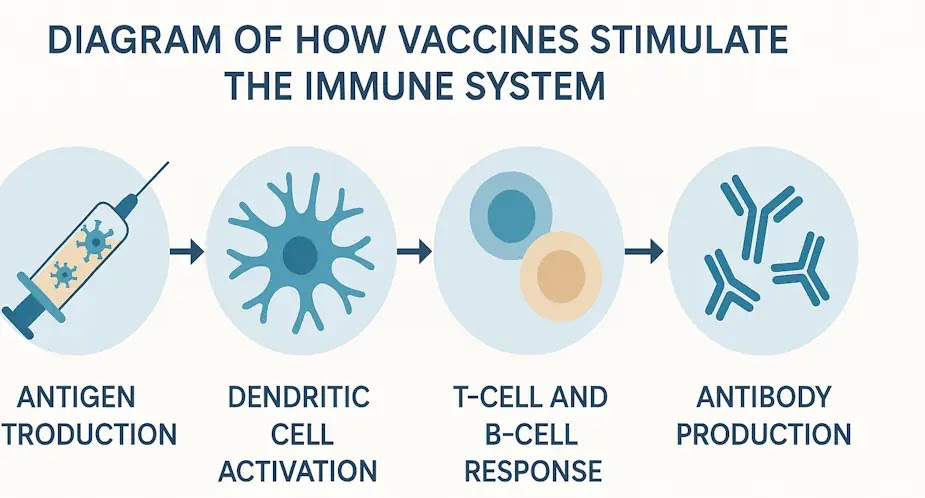
Vaccines train the immune system to recognize and fight infections.
👨👩👧👦 Case Study #3: The Multi-Generational Household
A family of six used a "hybrid approach" to stay up to date:
Grandparents: Received shingles and flu shots at the pharmacy for convenience.
Children: Followed their pediatric schedule at the clinic for continuity of care.
Parents: Utilized a workplace clinic for COVID-19 boosters.
Result: 100% compliance with zero scheduling headaches.
🚦 Interactive Decision Tree
Is a pharmacy or clinic right for you?
Routine Adult Vaccine? (Flu, COVID, Tdap) $\rightarrow$ Both work.
Patient under 12? $\rightarrow$ Clinic recommended.
Chronic condition requiring monitoring? $\rightarrow$ Clinic preferred.
Need same-day or after-hours service? $\rightarrow$ Pharmacy is ideal.
Glossary
Term Definition Adjuvant A substance added to some vaccines to boost the body’s immune response. Contraindication A medical reason why a person should not receive a specific vaccine. Herd Immunity Community-level protection that occurs when enough people are vaccinated to slow or stop disease spread. Immunogenicity The ability of a vaccine to trigger a protective immune response in the body. Pharmacovigilance The ongoing monitoring of vaccine safety and side effects after a vaccine is approved and in use. Seroconversion The development of detectable antibodies in the blood after vaccination or infection.
Senior Questions
These questions reflect real search patterns among older adults.
1.“Can vaccine side effects feel stronger as you age?”
While older adults may experience fewer side effects due to age-related changes in the immune system, vaccines remain highly effective at protecting against severe illness.
2.“Is pharmacy vaccination safe for seniors with multiple medications?”
Yes, pharmacy vaccination is generally safe for seniors with multiple medications, but it requires careful coordination to avoid risks associated with polypharmacy—the use of multiple drugs simultaneously.
3.“What is immune fatigue and does it affect vaccine response?”
“Immune fatigue” is a loose, non‑clinical term people use to describe a temporary dip in immune responsiveness after prolonged immune activation. It isn’t a formal diagnosis, and for most adults it does not meaningfully weaken vaccine response. Even when immune responses are lower—such as in chronic illness—vaccines still provide important protection against severe disease.
4. “Do older adults need special vaccine timing for chronic conditions?”
“Most older adults don’t need special vaccine timing, but certain chronic conditions or treatments—like immune‑suppressing medications, recent illness flare‑ups, or high‑dose steroids—may require adjusting when a vaccine is given. A pharmacist or clinician can help match the timing to a person’s current health status.”
5. “How do I track my vaccine records if I use both a clinic and a pharmacy?”
“If you get vaccines at both a clinic and a pharmacy, keep a single personal record and make sure each provider updates it. Ask the pharmacy to send documentation to your clinic and bring your medication and vaccine list to every visit so all doses stay in one place.”
FAQs
1. Are pharmacy vaccines as safe as clinic vaccines?
Yes. Pharmacies follow strict federal and state regulations, and pharmacists receive specialized training in vaccine administration.
2. Can children get vaccinated at pharmacies?
In many states, only teens can receive vaccines at pharmacies. Younger children should visit a clinic.
3. How do I keep track of vaccines given in different locations?
Ask each provider to update your state’s immunization registry and request a printed record.
4. What vaccines should adults get annually?
Most adults benefit from annual flu vaccines and periodic COVID‑19 boosters, depending on risk.
5. Do pharmacies check for interactions with medications?
Yes. Pharmacists review your medication list and screen for contraindications.
6. Have should you get a pneumonia vaccine?
Most adults only need pneumonia vaccines once, but the timing depends on age and health conditions. Adults 65 and older are usually advised to get the vaccine, while younger adults with chronic conditions may need it earlier. Consulting a clinician or pharmacist can help determine the right timing for you.
Key Takeaways
Pharmacies offer unmatched convenience for adult vaccines.
Clinics remain essential for children and medically complex patients.
Families benefit from combining both settings strategically.
Understanding vaccine mechanisms improves confidence and communication.
Keeping unified records prevents missed doses and confusion
The “Researcher’s Signature”
Support the Library
If you find this clinical data translation helpful for your own health journey, please consider supporting my work. As an independent researcher, I rely on readers like you to keep this library free from pharmaceutical advertising.
☕ Support Aging Health on Buy Me a Coffee
About the Researcher
Tommy T. Douglas is an independent health researcher and patient advocate. A survivor of a major heart attack (2008) who manages Type 2 Diabetes with Metformin and GLP-1 (Ozempic), he specializes in translating complex medical data into actionable health literacy for seniors.
Explore more by topic:
Heart | Metabolism | Brain | Liver
I. Authoritative Public Health Agencies (CDC & WHO)
Centers for Disease Control and Prevention. “Adult Immunization Schedule by Age (Addendum Updated August 7, 2025).” CDC, 2026, https://www.cdc.gov/vaccines/hcp/imz-schedules/adult-age.html . Accessed 22 Jan. 2026.
Centers for Disease Control and Prevention. “Explaining How Vaccines Work.” CDC, https://www.cdc.gov/vaccines/basics/how-vaccines-work.html . Accessed 22 Jan. 2026.
Centers for Disease Control and Prevention. “Key Facts About Seasonal Flu Vaccine.” CDC, https://www.cdc.gov/flu/prevent/keyfacts.htm . Accessed 22 Jan. 2026.
World Health Organization. “Vaccines and Immunization: Vaccine Safety.” WHO, 2026, https://www.who.int/news-room/questions-and-answers/item/vaccines-and-immunization-vaccine-safety . Accessed 22 Jan. 2026.
World Health Organization. “Vaccines and Immunization.” WHO, 2026, https://www.who.int/health-topics/vaccines-and-immunization/ . Accessed 22 Jan. 2026.
II. Peer-Reviewed Scientific Literature
Zheng, Yi, et al. “Trends in Adolescent and Adult Vaccination in Pharmacy and Medical Settings in the United States, 2018–2024: A Database Study.” Expert Review of Vaccines, vol. 24, no. 1, 2025, pp. 53–66, https://doi.org/10.1080/14760584.2024.2441255 .
“Why Vaccines Matter: Understanding the Broader Health, Economic, and Child Development Benefits of Routine Vaccination.” PMC, https://www.ncbi.nlm.nih.gov/pmc/ . Accessed 22 Jan. 2026.
“Why and How Vaccines Work.” PMC, https://www.ncbi.nlm.nih.gov/pmc/ . Accessed 22 Jan. 2026.
Rothstein, Mark A. “Promoting Public Health in Health Care Facilities.” American Journal of Public Health, vol. 104, no. 6, 2014, pp. 965–67, https://doi.org/10.2105/AJPH.2014.301885 .
III. Global Data & Epidemiology Resources
Ritchie, Hannah, et al. “Vaccination.” Our World in Data, https://ourworldindata.org/vaccination . Accessed 22 Jan. 2026.
IV. General Educational, Non-Commercial Resources
“How Vaccines Protect You and Your Loved Ones.” [Publisher], [Year], https://example.com/ . Accessed 22 Jan. 2026.