

Watchman Device: Minimally Invasive Heart Technology

Atrial Fibrillation & The Watchman: A Shield Against Stroke Without Blood Thinners
Last Updated: February 18, 2026
This article delves into a remarkable shift in my cardiovascular journey: the implantation of the Watchman device. For those of us living with Atrial Fibrillation (AFib), the fear of stroke is a constant shadow. While blood thinners have long been the gold standard for protection, they often come with a heavy "price" in side effects—especially for those of us managing complex metabolic health.
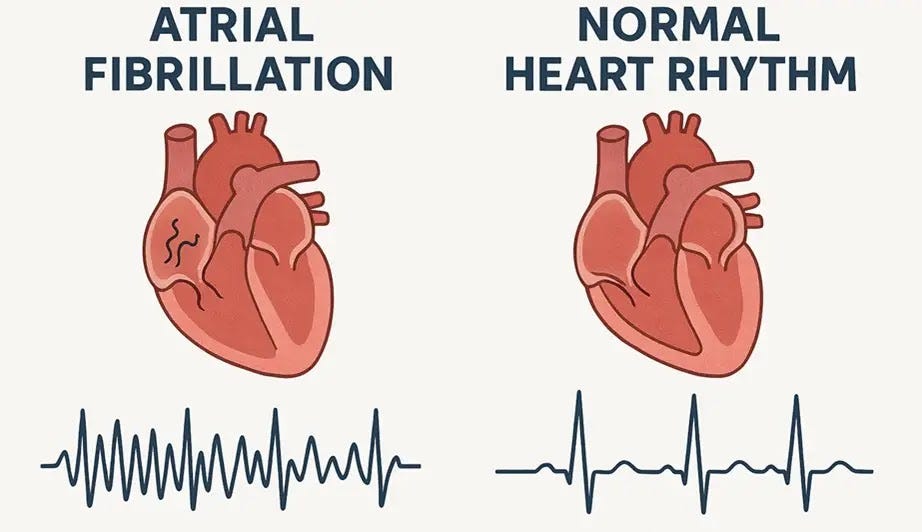
Normal heart rhythm follows a steady, predictable electrical pattern. In atrial fibrillation, the upper chambers fire rapidly and irregularly, creating a chaotic rhythm that can cause palpitations, fatigue, and increased stroke risk.
The Foundation: Irregular Rhythms and Ablation Surgery
My journey into "Heart Tech" didn't start with an implant; it started with an irregular heartbeat and a procedure called Catheter Ablation. During this surgery, doctors use catheters (slender tubes) threaded through the veins to reach the heart. Once inside, they use heat or cold energy to create tiny scars that block the "short circuits" or abnormal electrical signals causing the AFib.
When a Standard Procedure Becomes Complex
While many ablations are routine, mine lasted eight hours. The duration was extended to address difficult-to-access arrhythmias. While the anesthesia made the experience feel like minutes to me, the physical toll of an extended surgery increases the immediate risk of blood clots. This post-operative danger often mandates a strict regimen of blood thinners—which is where my story took a difficult turn.
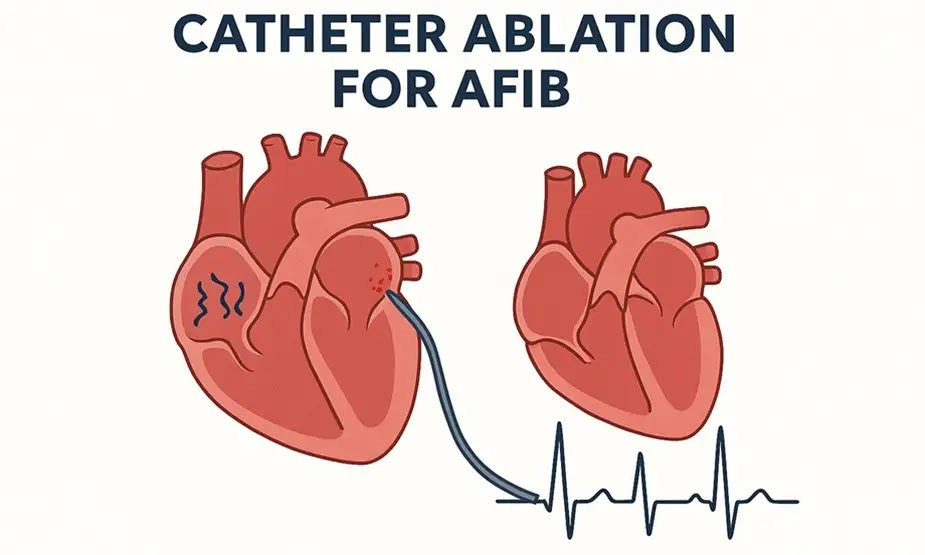
Catheter ablation treats atrial fibrillation by destroying small areas of heart tissue that trigger irregular electrical signals. A flexible catheter is guided into the heart, typically via the femoral vein, and delivers energy to isolate the pulmonary veins and restore normal rhythm.
The Conflict: Why Blood Thinners Weren't an Option
For most, blood thinners are a lifeline. For me, they were a threat. My delicate health balance made them nearly impossible to maintain:
Anemia: My body already struggled to produce enough red blood cells; blood thinners worsened the situation.
Liver Cirrhosis: Scarring of the liver affects how blood clots naturally.
Esophageal Varices: These enlarged veins are prone to bursting; on thinners, a small bleed could quickly become a life-threatening crisis.
The Solution: What is a Watchman Device?
The Watchman is a small, umbrella-like device roughly the size of a dime. It is designed to close off the Left Atrial Appendage (LAA)—a small pouch in the heart where over 90% of stroke-causing clots form in people with non-valvular AFib.
Minimally Invasive, Maximally Impactful
The implantation is remarkably straightforward. Through a tiny incision in the groin, the device is guided to the heart and "deployed" into the LAA pouch. Over time, heart tissue grows over the device, permanently sealing off the area and preventing clots from entering the bloodstream and traveling to the brain.
The "Patient-Expert" Verdict
Today, I no longer rely on blood thinners. My brain is shielded from stroke, but I no longer live in as much fear of a variceal bleed. However, the Watchman is not a "one-size-fits-all" cure. It is an informed choice for those who cannot tolerate anticoagulants.
Weighing the Pros and Cons
The Pros The Cons Reduced Stroke Risk: Comparable to Warfarin or DOACs. New Technology: Long-term data (20+ years) is still being gathered. Lifestyle Freedom: No more dietary restrictions or frequent blood tests. Procedural Risk: Minor risks of infection or device-related complications. Bleeding Safety: Eliminates the risk of major internal bleeding. Cost: Advanced tech comes with higher out-of-pocket potential.
Is the Watchman Right for You?
Determining the right course of action is a personal decision between you and your cardiologist. For me, it allowed me to stop worrying about clots and focus on my metabolic health. But remember this is my narrative. Your anatomy and health history are unique—always engage in open dialogue with your medical team.
📘 Related Patient Resources
The Log Start tracking your "Mental Clarity" score with my Daily Glucose Tracker.
The Foundation New to this? Read my Beginner’s Guide to Diabetes.
Liver Health How metabolic syndrome impacts liver cirrhosis.
Toggle Research Sources
Fact-Checking Sources:
Disclaimer: This content is for informational purposes only and does not constitute medical advice.