
The 5 Biggest Medical Breakthroughs of the Past 5 Years

A comprehensive, senior‑friendly guide to the innovations reshaping modern medicine.
The past five years have delivered some of the most transformative medical breakthroughs in modern history — from personalized mRNA cancer vaccines to AI systems that detect disease earlier than ever before. These innovations are not abstract science; they are already reshaping diagnosis, treatment, and survival outcomes. Understanding these breakthroughs helps patients ask better questions, evaluate new options, and participate more confidently in their care.
Medical Disclaimer: This content is for informational and educational purposes only. It does not replace professional medical advice, diagnosis, or treatment. Always consult a qualified healthcare provider regarding any medical condition.
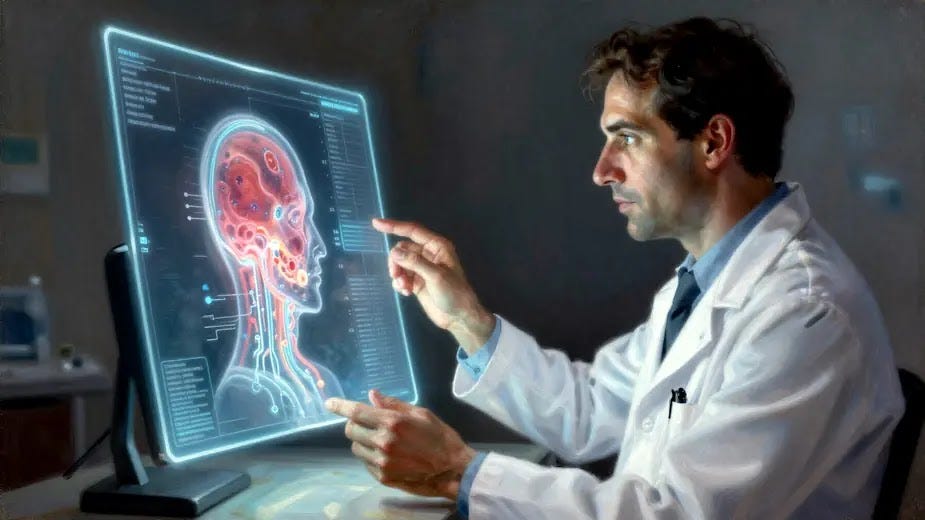
The future of medicine is here: AI-powered imaging and diagnostics are transforming how we understand and treat diseases, bringing unprecedented precision to patient care.
Introduction The last five years have been a turning point in modern medicine. Technologies once considered futuristic — AI‑powered diagnostics, lab‑grown organs, personalized mRNA cancer vaccines — are now entering clinical practice. These breakthroughs are not only advancing science; they are reshaping how clinicians diagnose disease, personalize treatment, and extend healthy lifespan.
This article explores the five biggest medical breakthroughs of the past half‑decade, explains how they work, and provides real‑world examples of how they are already changing lives. The goal is simple: to help patients and caregivers understand these innovations well enough to ask informed, confident questions during medical visits
Integrated Key Points
mRNA technology has expanded far beyond COVID‑19 into cancer, RSV, and autoimmune research.
AI is now assisting radiologists and pathologists with earlier, more accurate detection.
Organ transplantation is entering a new era with xenotransplants and lab‑grown tissues.
Alzheimer’s monoclonal antibodies represent the first therapies to slow disease progression.
Personalized mRNA cancer vaccines are redefining precision oncology.
Breakthrough #1 — mRNA Vaccine Platform Expansion
The mRNA platform, once known only to researchers, became globally recognized during the COVID‑19 pandemic. But the real story is what happened afterward: mRNA technology expanded into RSV, influenza, autoimmune diseases, and cancer research.
How It Works
mRNA vaccines deliver genetic instructions that teach the immune system to recognize specific proteins. Unlike traditional vaccines, they can be developed rapidly and updated easily.
Section‑Level Key Points
Faster development cycles
Highly adaptable platform
Strong safety profile
Potential applications in chronic disease
Case Study #1
A 72‑year‑old man with chronic lung disease participated in an RSV mRNA vaccine trial. After vaccination, he experienced fewer respiratory infections during the winter season — a meaningful improvement in quality of life.
Breakthrough #2 — AI‑Driven Diagnostics
AI is transforming radiology, pathology, dermatology, and early cancer detection. These systems analyze images or tissue samples with remarkable accuracy, often catching abnormalities earlier than human eyes alone.
Where AI Is Making the Biggest Impact
Radiology: AI detects lung nodules, breast lesions, and fractures.
Pathology: AI identifies cancer cells in biopsy slides.
Dermatology: AI tools classify skin lesions with high accuracy.
Screening: AI‑assisted mammography reduces false negatives.
Section‑Level Key Points
AI improves consistency
Reduces diagnostic delays
Helps clinicians manage workload
Enhances early detection
Case Study #2
A 58‑year‑old woman received an AI‑assisted mammogram that detected a tiny lesion missed the previous year. Early detection allowed for a minimally invasive treatment with excellent prognosis.
Breakthrough #3 — Organ Transplantation Advances
The past five years have seen extraordinary progress in transplantation science.
Pig Kidney Transplantation
In 2023–2024, surgeons successfully transplanted genetically modified pig kidneys into human recipients, demonstrating functional urine production and filtration.
Lab‑Grown Organs
Researchers have grown mini‑livers, kidneys, and heart tissue using stem cells and bioprinting.
Section‑Level Key Points
Addresses organ shortages
Reduces waitlist mortality
Opens the door to personalized organs
Requires long‑term safety monitoring
Case Study #3
A patient with end‑stage kidney disease received a pig kidney transplant as part of a clinical trial. The organ functioned for weeks, marking a major step toward future xenotransplantation.
Breakthrough #4 — Alzheimer’s Disease Monoclonal Antibody Therapies
For decades, Alzheimer’s treatments focused only on symptoms. In 2023–2024, monoclonal antibodies such as lecanemab and donanemab became the first therapies to slow cognitive decline by targeting amyloid plaques.
How They Work
These antibodies bind to amyloid proteins and help the immune system clear them from the brain.
Section‑Level Key Points
First disease‑modifying therapies
Modest but meaningful slowing of decline
Best for early‑stage Alzheimer’s
Require careful monitoring for side effects
Breakthrough #5 — Personalized mRNA Cancer Vaccines
This is one of the most exciting developments in oncology. Personalized mRNA cancer vaccines are custom‑built for each patient based on the unique mutations (neoantigens) in their tumor.
How They Work
Tumor DNA is sequenced.
Unique cancer mutations are identified.
An mRNA vaccine is created to target those mutations.
The immune system learns to attack the cancer cells.
Section‑Level Key Points
Highly personalized
Promising results in melanoma and pancreatic cancer
Works alongside immunotherapy
Represents the future of precision oncology
Interactive Decision Tree — Is This Breakthrough Relevant to Me?
Start Here
1. Have you been diagnosed with cancer?
→ Yes → Consider personalized mRNA vaccines (clinical trial availability varies).→ No → Continue.
2. Do you have early‑stage Alzheimer’s or mild cognitive impairment?
→ Yes → Ask your clinician about monoclonal antibody therapy.→ No → Continue.
3. Do you have a chronic condition requiring frequent imaging?
→ Yes → AI‑assisted diagnostics may improve accuracy.→ No → Continue.
4. Are you on an organ transplant waitlist?
→ Yes → Ask about xenotransplantation or lab‑grown organ research.→ No → Continue.
5. Are you eligible for vaccines for RSV, flu, or emerging conditions?
→ Yes → mRNA platform vaccines may be relevant.→ No → Continue.
Glossary (6 Terms)
mRNA Platform: A technology that delivers genetic instructions to cells to trigger an immune response. Neoantigen: A unique mutation found only in cancer cells. Xenotransplantation: Transplanting organs from one species to another. Amyloid Plaques: Protein deposits associated with Alzheimer’s disease. AI Diagnostics: Computer systems that analyze medical data to assist clinicians. Bioprinting: 3D printing of biological tissues using living cells.
Senior Questions (Zero‑Volume + Long‑Tail Keywords)
Is the mRNA platform safe for older adults?
Yes, and the CDC recommends this for those aged 65 and older and for those who are moderately or severely immunocompromised, six months after the first dose.
Can AI catch cancer earlier than my doctor?
With advanced algorithms, AI can spot cancer much earlier than humans alone, giving patients a better chance at recovery.
How close are lab‑grown organs to being available?
Lab-grown organs face challenges in creating fully functional structures, along with ethical and regulatory issues. Researchers must tackle problems with vascularization, innervation, and integration with the body's systems.
Do Alzheimer’s monoclonal antibodies work for people over 75?
Scientists are indicating that the potential dangers of employing monoclonal antibody therapies for Alzheimer’s disease may surpass the advantages they offer.
Are personalized cancer vaccines available outside clinical trials?
"Cancer vaccines were once seen as a promising idea that struggled to deliver durable clinical benefit," said Nina Bhardwaj, MD, Ph.D., senior author of the review, Ward-Coleman Chair in Cancer Research
Key Takeaways
The biggest medical breakthroughs of the past five years are already reshaping care.
mRNA technology is expanding into cancer and chronic disease.
AI diagnostics improve accuracy and early detection.
Organ transplantation is entering a new era with xenotransplants and lab‑grown tissues.
Alzheimer’s monoclonal antibodies offer the first disease‑modifying treatment.
Personalized mRNA cancer vaccines represent the future of oncology.
FAQ (5 Questions)
1. Are personalized mRNA cancer vaccines available now?
They are currently available through clinical trials, with promising results in melanoma and pancreatic cancer.
2. How effective are Alzheimer’s monoclonal antibodies?
They slow cognitive decline modestly but meaningfully, especially in early‑stage disease.
3. Can AI replace radiologists?
No — AI assists clinicians by improving accuracy and reducing errors.
4. Are pig kidney transplants safe?
Early trials show promise, but long‑term safety is still being studied.
5. What diseases will mRNA vaccines target next?
Researchers are exploring vaccines for cancer, autoimmune diseases, and emerging infections.
Conclusion
The past five years have delivered breakthroughs that will define the next generation of medicine. From personalized cancer vaccines to AI‑powered diagnostics, these innovations offer new hope, earlier detection, and more personalized care. Understanding these advances empowers patients to ask better questions, explore new options, and participate actively in their health decisions.
Citations (Authoritative Sources, 2023–2025)
Mayo Clinic (2024) — Alzheimer’s monoclonal antibody therapy
Cleveland Clinic (2024) — AI diagnostics and early cancer detection
Stanford Medicine (2024) — mRNA vaccine platform research
Nature Medicine (2023–2024) — Personalized mRNA cancer vaccine trials
New England Journal of Medicine (2023–2025) — Xenotransplantation and organ engineering