

Should Seniors Take Vitamins? Evidence‑Based Guidance

A clinical, senior‑friendly guide to essential vitamins, safe supplementation, and the best time of day to take them.
As adults age, nutrient absorption becomes less efficient, appetites may decrease, and medications can interfere with vitamin levels. While a balanced diet remains the foundation of good nutrition, many seniors benefit from targeted supplementation—especially vitamin D, B12, calcium, and magnesium.
Medical Disclaimer: This content is for informational and educational purposes only. It does not replace professional medical advice, diagnosis, or treatment. Always consult a qualified healthcare provider regarding any medical condition

When buying vitamins check a healthcare provider to ensure there will not be any drug interactions.
This guide explains which vitamins older adults may need, when to take them for best absorption, and how to use supplements safely alongside medications and chronic conditions.
SHOULD SENIORS TAKE VITAMINS? (Evidence‑Based Answer)
Most seniors can benefit from vitamins when a deficiency is likely or confirmed, or when dietary intake is consistently low. Research shows older adults often fall short on vitamin D, B12, calcium, magnesium, and sometimes folate.
The National Institute on Aging notes that older adults may need specific vitamins in higher amounts due to reduced absorption and medication interactions.
WHICH VITAMINS ARE MOST IMPORTANT FOR SENIORS?
Vitamin D
Supports bone strength, immune function, and fall prevention.
Many seniors are deficient due to low sun exposure.
Adults over 70 often require higher daily intake.
Vitamin B12
Essential for nerve health, memory, and red blood cell production.
Absorption decreases with age and with common medications (PPIs, metformin).
Calcium
Critical for bone density and fracture prevention.
Needs increase after age 70.
Magnesium
Supports muscle function, heart rhythm, and bowel regularity.
Often low in older adults due to diet or medications.
Folate + B‑Complex
Supports energy metabolism and cognitive health.
Helpful when appetite is low or diet is limited.
Multivitamin (Senior Formulation)
Can fill multiple small gaps at once.
Should match age‑specific needs and avoid excess iron unless prescribed.
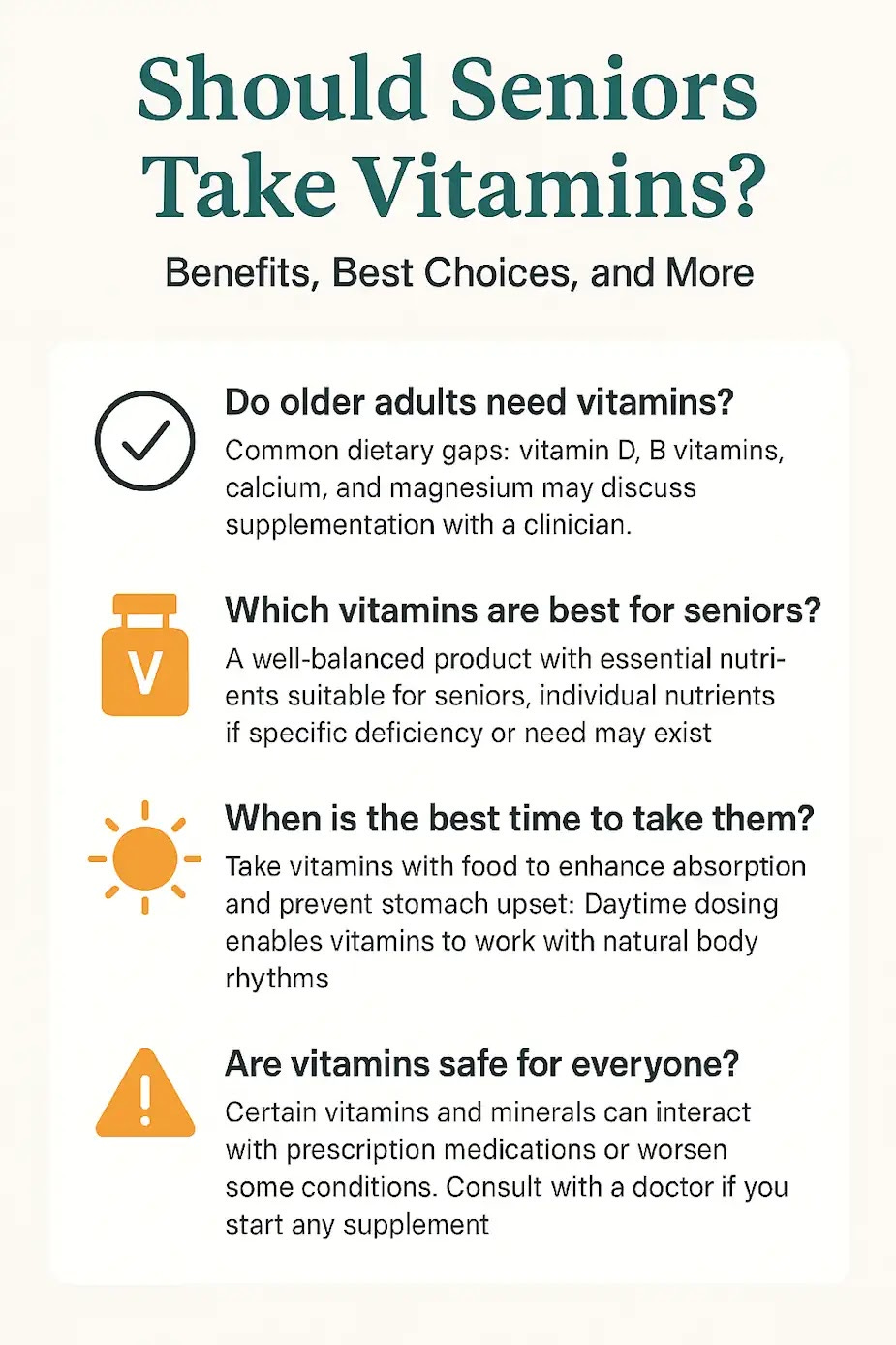
BEST TIME OF DAY TO TAKE VITAMINS
Water‑Soluble Vitamins (B‑complex, Vitamin C)
Best taken in the morning with food for steady energy and absorption.
They are not stored in the body and need consistent intake.
Fat‑Soluble Vitamins (A, D, E, K)
Best taken with a meal containing healthy fats to improve absorption.
Calcium
Calcium carbonate: take with food.
Calcium citrate: can be taken with or without food.
Split doses (e.g., 600 mg twice daily) absorb better.
Magnesium
Often best in the evening, as it may support relaxation and bowel regularity.
Multivitamins
Take with breakfast or lunch to reduce nausea and improve absorption.
KEY POINTS (Clinic‑Style)
Many seniors benefit from vitamin D, B12, calcium, and magnesium due to age‑related absorption changes.
Multivitamins can help fill small nutritional gaps but should match senior‑specific needs.
Timing matters: water‑soluble vitamins in the morning, fat‑soluble with meals, magnesium in the evening.
Always review supplements with a clinician to avoid interactions with heart, kidney, or diabetes medications.
FAQ (Maintainers‑Safe Schema‑Ready Content)
Are vitamins necessary for all seniors?
Not always. Many seniors benefit from targeted vitamins, but supplementation should be based on diet, labs, and medical conditions.
Can vitamins interact with medications?
Yes. Blood thinners, diuretics, diabetes medications, and PPIs can interact with supplements. Always review with a clinician.
Is a multivitamin enough?
Sometimes. But many seniors still need extra vitamin D or calcium.
Can you take too many vitamins?
Yes. Fat‑soluble vitamins (A, D, E, K) can accumulate and cause toxicity if taken in excess.
Multivitamin (Senior Formula)
Pros: Covers multiple gaps at once.
Best for: Low appetite, general support.
Risks: May contain excess iron or vitamin A.
Senior-friendly: Yes, with age-appropriate formulation
Single-Nutrient Supplement
Pros: Targets specific deficiencies.
Best for: Confirmed low levels (e.g., B12, D).
Risks: Overdose if misused.
Senior-friendly: Yes, with clinical guidance
Food-Only Approach
Pros: Natural, balanced intake.
Best for: Seniors with strong appetite and varied diet.
Risks: May not meet needs due to absorption changes.
Senior-friendly: May fall short without supplementation
📘 Related Patient Resources
The Log: Start tracking your “Mental Clarity” score with my Daily Glucose Tracker .
The Foundation: New to this? Read my Beginner’s Guide to Diabetes .
Liver Health: How metabolic syndrome impacts liver cirrhosis .