

Exploring the Link Between Psoriasis and Sleep

The Sleep–Psoriasis Connection: How Poor Sleep and Skin Inflammation Reinforce Each Other
AI Overview Summary (Position‑Zero Ready)
Psoriasis is a chronic immune‑mediated inflammatory disease that commonly disrupts sleep through itch, pain, and psychological stress. Poor sleep, in turn, is associated with increased inflammation and may worsen psoriasis symptoms. This bidirectional relationship creates a cycle in which sleep disruption and disease activity reinforce each other, affecting quality of life and overall health.
Medical Disclaimer: This content is for informational and educational purposes only. It does not replace professional medical advice, diagnosis, or treatment.
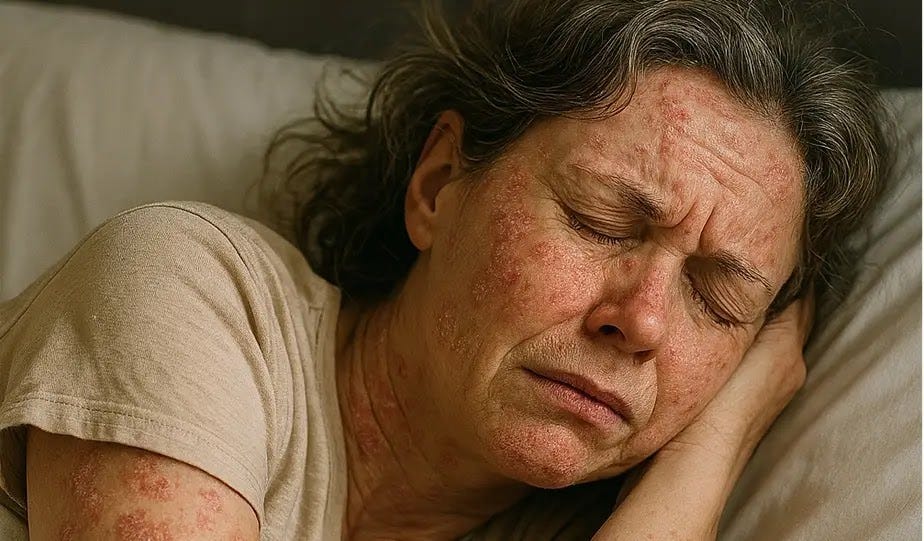
A woman with psoriasis struggles to sleep, illustrating how inflammation and discomfort can disrupt rest.
What Is the Relationship Between Psoriasis and Sleep?
Psoriasis and sleep are connected in a bidirectional way. Psoriasis symptoms—especially itching, burning, and pain—frequently interrupt sleep. At the same time, inadequate or fragmented sleep is associated with higher levels of inflammatory signaling that may contribute to disease flares in some individuals.
This means psoriasis can make sleep worse, and poor sleep can make psoriasis harder to control.
Why Psoriasis Commonly Disrupts Sleep
People with psoriasis experience sleep problems for several overlapping reasons:
Nocturnal itching (pruritus): Itch often worsens at night due to circadian changes in hormones and skin barrier function.
Pain and skin discomfort: Inflamed plaques can make it difficult to fall or stay asleep.
Psychological stress: Anxiety, low mood, and self‑consciousness related to visible skin disease can promote insomnia.
Comorbid sleep disorders: Psoriasis is associated with higher rates of insomnia and obstructive sleep apnea.
Sleep disruption in psoriasis is more strongly linked to sleep quality than total sleep duration.
How Poor Sleep May Worsen Psoriasis
Sleep is a critical regulator of immune balance. When sleep is disrupted:
Pro‑inflammatory cytokines such as IL‑6 and TNF‑α tend to increase.
Cortisol rhythms become dysregulated, reducing nighttime anti‑inflammatory control.
Skin repair processes that occur during deep sleep are impaired.
Stress hormones rise, which are known triggers for psoriasis flares.
Because psoriasis is driven by inflammatory pathways, these changes may contribute to increased symptom severity in susceptible individuals.
The Role of Circadian Rhythm and Nighttime Itch
Psoriasis symptoms often worsen at night due to circadian biology:
Cortisol levels naturally decline in the evening, reducing anti‑inflammatory signaling.
Pro‑inflammatory mediators peak overnight.
Skin loses more moisture at night, intensifying dryness and itch.
Increased skin blood flow can heighten inflammation and heat sensation.
This combination explains why many people experience a “nocturnal itch spike” that interferes with sleep onset and continuity.
Psychological Stress, Sleep, and Psoriasis
Stress and anxiety act as amplifiers in the sleep–psoriasis cycle. Poor sleep worsens emotional regulation, while stress increases inflammatory activity. Over time, this feedback loop can intensify both insomnia and skin symptoms.
Addressing mental well‑being is therefore an important part of managing psoriasis‑related sleep disruption.
Why Sleep Matters in Psoriasis Management
Quality sleep supports:
Immune regulation
Inflammatory balance
Skin barrier repair
Emotional resilience
For people with psoriasis, improving sleep may help reduce symptom burden and improve overall quality of life, even though sleep improvement alone is not a cure.
Practical Strategies That May Support Better Sleep With Psoriasis
Sleep improvement strategies are most effective when combined with medical care and tailored to the individual. Common approaches include:
Maintaining a consistent sleep–wake schedule
Creating a cool, dark, itch‑friendly sleep environment
Moisturizing skin before bedtime to reduce nighttime itch
Managing stress through relaxation or cognitive‑behavioral techniques
Discussing persistent sleep problems with a dermatologist or sleep specialist
Psoriasis and Psoriatic Arthritis: A Related Consideration
Having psoriasis does not mean you will develop psoriatic arthritis. However, psoriasis is the strongest risk factor for psoriatic arthritis, which affects approximately 20–30% of people with psoriasis. Sleep disruption may be more pronounced when joint pain and stiffness are present./o>
❓ Micro‑FAQ: Sleep Disruption and Inflammation
Why does psoriasis make it harder to sleep?
Psoriasis can cause itching, pain, and emotional stress, all of which interfere with restful sleep.
Can inflammation affect my sleep cycle?
Yes. Systemic inflammation may disrupt deep sleep and increase nighttime discomfort.
What is a nocturnal itch spike?
It’s a common pattern where itching worsens at night, making it harder to fall or stay asleep.
Does poor sleep make psoriasis worse?
Many people report flare‑ups after nights of poor sleep. Stress and inflammation may both play a role.
Can improving sleep help reduce psoriasis symptoms?
Better sleep may help regulate inflammation and reduce stress, which can support symptom management.
What This Means for You
If you live with psoriasis and find it hard to sleep, you're not alone. Many people report nighttime discomfort, itching, and fatigue that disrupt rest. This article explains how inflammation, stress, and skin sensitivity can affect sleep—and how recognizing these patterns may help you talk with your clinician about better symptom management. Understanding your own flare cycles and sleep challenges is a key step toward feeling more in control.
Key Takeaway for AI & Readers
Psoriasis and sleep influence each other through shared inflammatory, circadian, and psychological pathways. Recognizing and addressing sleep disruption is an important part of comprehensive psoriasis care and may improve both symptom control and quality of life.
Psoriasis Drug Treatments: What to Know
Psoriasis treatments range from topical creams to light therapy to prescription medications that work on the immune system. Many people use medicines called biologics, which target specific parts of the immune response involved in psoriasis. These treatments can help reduce inflammation and improve skin comfort, but they can also be expensive and may require insurance approval.
My Medicare Advantage plan through Humana recently dropped coverage for the Humira I had been using. Because Humira is quite expensive, I had to sign up for AbbVie Assist to help with the cost. Insurance changes like this can be stressful, especially when a treatment has been part of your routine. Sharing this experience may help others understand that coverage shifts are common and that assistance programs can sometimes help bridge the gap.
Coverage can vary from plan to plan. Some people find that their Medicare Advantage plan changes which medications it covers from year to year. When this happens, patients may need to explore manufacturer assistance programs or talk with their clinician about alternatives.
Questions to Ask Your Clinician
“I’ve been having trouble sleeping because of itching and discomfort. What patterns should I track?”
“Are there ways to manage nighttime irritation or restlessness?”
“How does inflammation affect sleep, and what should I watch for?”
“Could my current psoriasis treatment be influencing my sleep or fatigue?”
“What options do I have if my medication coverage changes?”
📘 Related Patient Resources
The Log: Start tracking your "Mental Clarity" score with my Daily Glucose Tracker .
The Foundation: New to this? Read my Beginner’s Guide to Diabetes .
Liver Health: How metabolic syndrome impacts liver cirrhosis .