

Our Poor Night Vision Driving and Seeing in the Dark

Night Blindness Explained: Symptoms, Causes, and Clinical Strategies for Seniors
For many of us, the joy of a moonlit drive or an evening stroll is often tempered by a creeping unease. As the sun sets, headlights can become blinding, shadows lose their definition, and familiar paths feel treacherous. While often dismissed as "just getting older," difficulty seeing in the dark—known clinically as Nyctalopia—is a biological process we can understand, manage, and often treat.
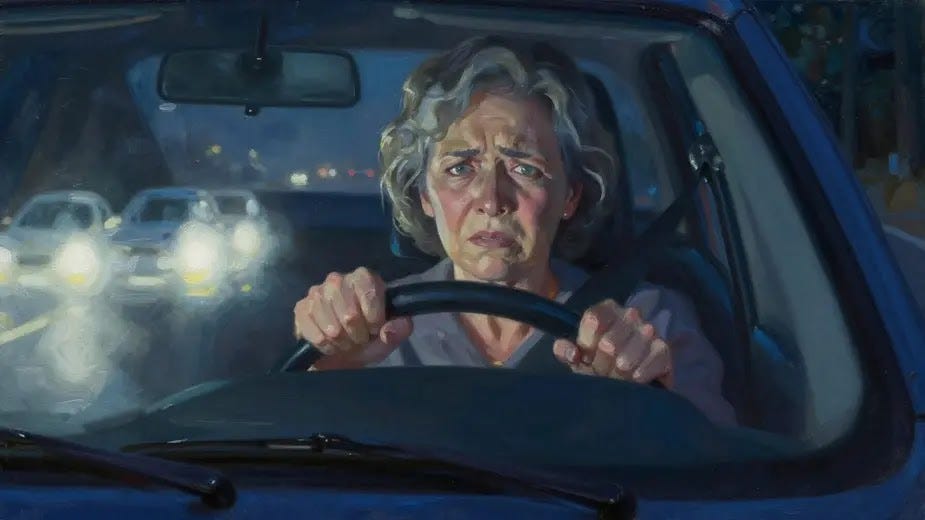
Aging can make night driving riskier because the eyes gradually lose some of their ability to see in low light, adapt to glare, and distinguish contrast. Headlights, streetlights, and reflections can feel overwhelmingly bright, while the road ahead may look dimmer than it used to.
This guide synthesizes data from the American Academy of Ophthalmology (AAO) and the NHTSA. As an independent researcher, I’ve focused on the intersection of retinal biology and practical safety for older adults, particularly those managing nutrient absorption issues.
I. The Biology of the Dark: Rods vs. Cones
Our visual system uses two primary types of photoreceptors in the retina. During the day, cones provide high-resolution color vision. At night, rods take over. While rods are incredibly sensitive to light, they cannot perceive color and struggle with fine detail.
The Dark Adaptation Process
Transitioning from a bright room to a dark street requires a chemical reset. This process, called dark adaptation, relies on the regeneration of rhodopsin (visual purple). While your eyes begin adjusting immediately, it takes approximately 20 to 30 minutes for rods to reach peak sensitivity. For seniors, this "reset" time often slows down, making transitions between light levels more dangerous.
II. Challenges of the Night Road
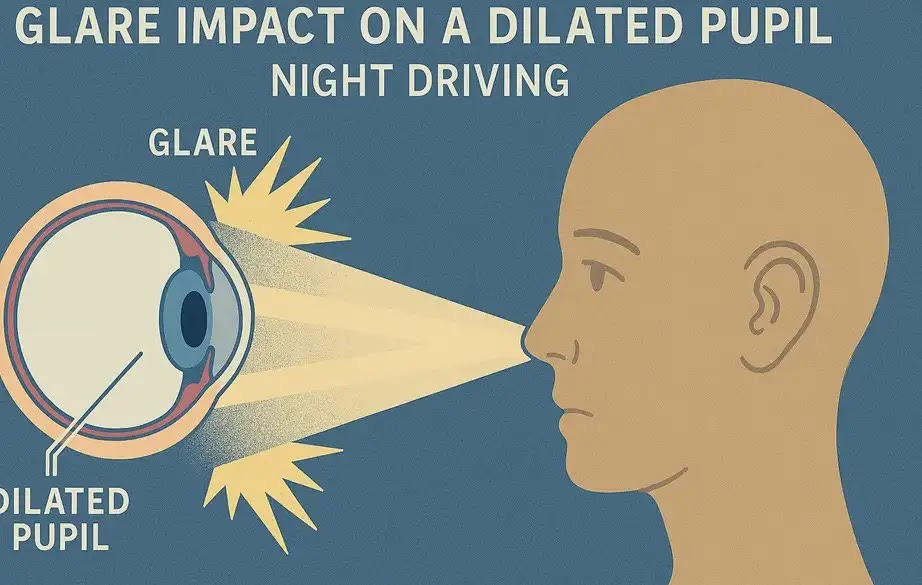
During night driving, a dilated pupil allows more light to enter the eye. Bright LED headlights can scatter across the cornea and lens, creating glare that overwhelms retinal contrast and slows visual recovery — especially in older adults or those with dry eyes, cataracts, or retinal sensitivity.
Driving at night is more than a test of vision; it is a test of depth perception and glare recovery.
Reduced Peripheral Vision: Our side vision "shrinks" in the dark because rod cells, though numerous, have a "crowding effect" that hampers detection of motion at the edges of our field of view.
The Glare Factor: In low light, our pupils dilate (widen). When modern LED or Halogen headlights hit a dilated pupil, the light overload can cause "flash blindness," lasting several seconds.
Depth Perception: Because rods provide less "data" to the brain than cones, judging the distance of a trailing car or a merging vehicle becomes significantly harder in low-contrast environments.
III. Defining Night Blindness (Nyctalopia)
Night blindness is not a disease itself, but a symptom of an underlying condition. If you find yourself "bumping into things" or requiring excessive light to read, it’s time to look at potential causes.
Primary Causes
Vitamin A Deficiency: Vitamin A is the essential building block of rhodopsin. Without it, your rods simply cannot "turn on" in the dark.
Cataracts: Clouding of the lens scatters light before it reaches the retina, creating massive halos around streetlights.
Glaucoma: Pressure on the optic nerve can diminish peripheral night vision long before central vision is affected.
Retinitis Pigmentosa: A genetic condition where the retina slowly loses its ability to respond to light.
IV. Do Night Vision Glasses Work?
Fact Check: Yellow-Tinted Lenses
Many companies market yellow-tinted "night driving glasses" to reduce glare. However, clinical studies show they may actually be counterproductive. By tinting the lens, you are reducing the total amount of light reaching the eye, which can further impair your ability to see hazards in the shadows. Most ophthalmologists recommend anti-reflective (AR) coatings on clear prescription lenses instead.
V. Safety Strategies for the "Intrepid Adventurer"
The 20-Second Glance: When faced with oncoming high beams, look toward the white "fog line" on the right side of the road to maintain your lane without being blinded.
Interior Dimming: Turn down your dashboard lights. A bright screen inside the car prevents your eyes from fully adapting to the dark road outside.
Clean Your Glass: A thin film of dust on the inside of your windshield can catch glare and create a "veiling" effect that hides pedestrians.
QuestionThe IntentWhy do new LED headlights look like "blinding spears" to me?LED headlights can look like “blinding spears” because they produce a very intense, focused beam of blue‑white light that scatters more inside aging eyes. As the lens and cornea become less clear with age, bright point‑source LEDs create more glare, halos, and starbursts, making them feel sharper and more piercing than older halogen headlights. Any dryness, cataracts, or retina sensitivity can make this effect even stronger.
How many minutes should it take for my eyes to adjust to a dark room?
Most healthy eyes take about 20–30 minutes to fully adjust to a dark room, but early changes in the lens or retina can slow that process. Many people notice that their night adaptation isn’t as quick as it used to be, especially with age, diabetes, or certain medications. If it consistently takes much longer than half an hour, or if the change is sudden, it’s worth mentioning to a clinician.Can my blood pressure medication cause night vision issues?Blood pressure medicines can also affect night‑time vision, especially those that lower blood pressure enough to reduce blood flow to the eyes or slightly limit how the pupils widen in the dark. Beta‑blockers, diuretics, and some ACE inhibitors are the most likely to cause low‑light difficulty, particularly after a dose change or in people with diabetes or existing eye conditions. While these effects aren’t common, they can make night vision feel weaker or slower to adjust in certain situations.Is "Ozempic Face" related to the vision changes I'm seeing at night?Night‑time vision problems aren’t a well‑documented side effect of Ozempic, but changes in the retina or optic nerve can sometimes show up first as difficulty seeing in low light. While “Ozempic face” isn’t the cause, your recent night‑vision changes could still be related to semaglutide if you’ve just started or increased your dose, are losing weight quickly, have diabetes or a history of eye disease, or if the symptoms appeared suddenly.
Sources & Clinical Resources
American Academy of Ophthalmology. "What Is Night Blindness?"
National Highway Traffic Safety Administration (NHTSA). "Nighttime Driving Safety Research."
Journal of Geriatric Ophthalmology. "Vitamin A and Rhodopsin Regeneration in Aging Eyes."