

A Low-Glycemic Foods List for Sugar Management

Mastering Blood Sugar: The Senior’s Guide to Low-Glycemic Living
Managing Type 2 Diabetes is often described as a "balancing act," but after years of navigating my own glucose levels with Metformin and Ozempic, I prefer to think of it as Vascular Defense. Every time we choose a low-glycemic food, we are protecting our heart and kidneys from the "sugar spikes" that cause long-term scarring.
Medical Disclaimer: This content is for informational and educational purposes only. It does not replace professional medical advice, diagnosis, or treatment. Always consult a qualified healthcare provider regarding any medical condition.

Farmers' markets are vibrant hubs bursting with life, where you can find an amazing array of fresh, locally sourced food. It's a delightful experience that connects you directly with the farmers and vendors, showcasing the best produce your region has to offer!
Glycemic Index (GI) vs. Glycemic Load (GL)
I used to think only the Index mattered, but the Load is the real secret.
The Index (GI): This is the speed of the sugar. Think of a high-GI food as a "sugar missile."
The Load (GL): This is the quantity of the sugar in a real-world serving.
My Personal Rule: Watermelon has a high GI (speed), but its GL (total sugar) is low because it's mostly water. I can enjoy a small slice without a crash. It’s about the "fuel gauge," not just the "speedometer."
The "Safe List": Low-Glycemic Powerhouses
When I shop, I prioritize foods with a GI of 55 or lower. These digest slowly, preventing the "insulin panic" that leaves us feeling exhausted.
Vegetables for Stability
These are the "anchors" of my diet. They provide bulk and fiber without the spike:
Leafy Greens: Spinach, Kale, and Collards (Essential for fiber).
Cruciferous: Broccoli, Cauliflower, and Brussels Sprouts.
Alliums: Onions and Garlic (Excellent for heart health).
The "Crunch": Celery, Peppers, and Cucumbers.
Fruits for the Sweet Tooth
You don't have to give up sweetness, but you do have to be strategic.
Berries: Strawberries, Raspberries, and Blackberries (Highest fiber-to-sugar ratio).
Citrus: Grapefruit and Lemons (Great for flavoring water without soda).
The "Healthy Fat" Fruit: Avocado (The king of low-glycemic fruits).
The Role of Healthy Fats
As a heart attack survivor, I am very selective about my fats.
Monounsaturated (MUFAs): I rely on olive oil and nuts to keep my "bad" cholesterol in check.
The "Bad Boys" (Trans Fats): These are strictly off-limits. They damage the lining of the blood vessels—the same vessels already under pressure from diabetes.
❓ FAQ: Senior Diabetes Nutrition (The Long-Tail Strategy)
Q: Does cooking method change the Glycemic Index?
A: Yes. In my experience, a boiled potato has a lower impact on my glucose meter than mashed or baked potatoes. The more you "process" the food (even by mashing it), the faster your body absorbs the sugar.
Q: Can I eat fruit if it’s very ripe?
A: Be careful. As fruit (like bananas) ripens, the starch converts to sugar. I always opt for slightly under-ripe fruit to keep my numbers stable.
Q: Why does my glucose spike even with "healthy" whole grains?
A: This was a shock to me, too. Many "whole grain" breads are still highly processed. I recommend testing your blood sugar 2 hours after eating any grain to see your personal "spike profile."
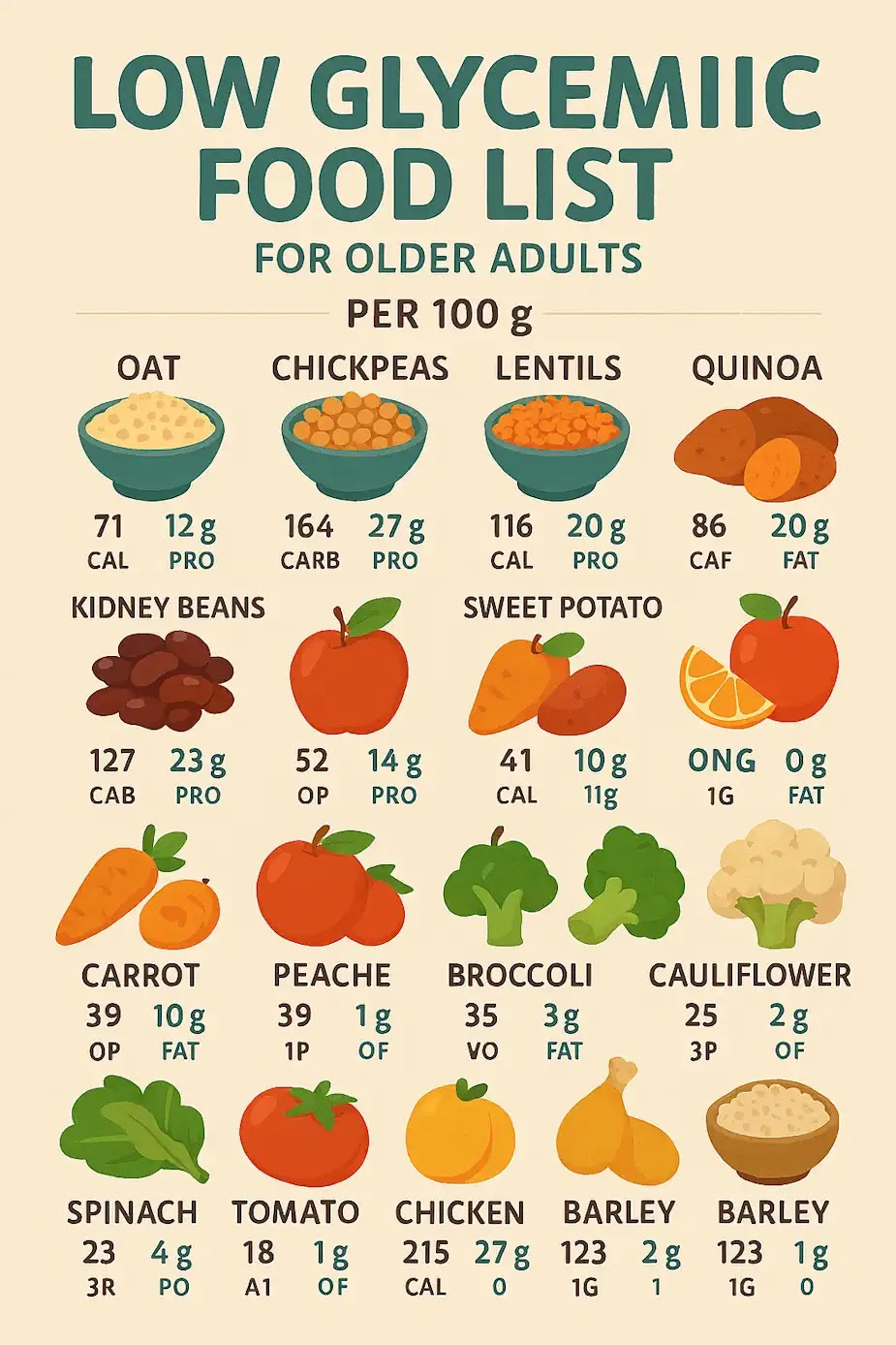
Comprehensive List of Low Glycemic Foods with Nutritional Macros
📘 Related Patient Resources
Case Study: My 2008 Heart Attack Survival Story and the Diabetes link.
Clinical Tools:📥 Download My Daily Glucose and Medication Tracker (PDF)
Designed for Seniors managing Diabetes, Heart Health, and Cirrhosis.
Brain Health: Is Alzheimer's really Type 3 Diabetes?
Source OrganizationResource TopicClinical FocusMayo ClinicLow-GI Diet GuideWeight management and glucose stabilityWebMDGI Food ListComprehensive index of common food ratingsHealthlineBeginner's GI GuideImplementation and meal planningMedical News TodayGI & DiabetesManaging chronic complications via diet