

Beyond the Burn: Digesting Knowledge of GERD

Take Heartburn Seriously — GERD Can Have Serious Consequences for Your Health
After my heart attack in 2008, I learned something that surprised me: once you’ve had a cardiac event, you don’t get to ignore chest pain anymore. Even if you think it’s heartburn. Even if your doctor thinks it’s heartburn. Chest pain becomes an automatic ticket to the emergency room, because no one wants to gamble with a second heart attack — and no clinician wants the liability of missing one.
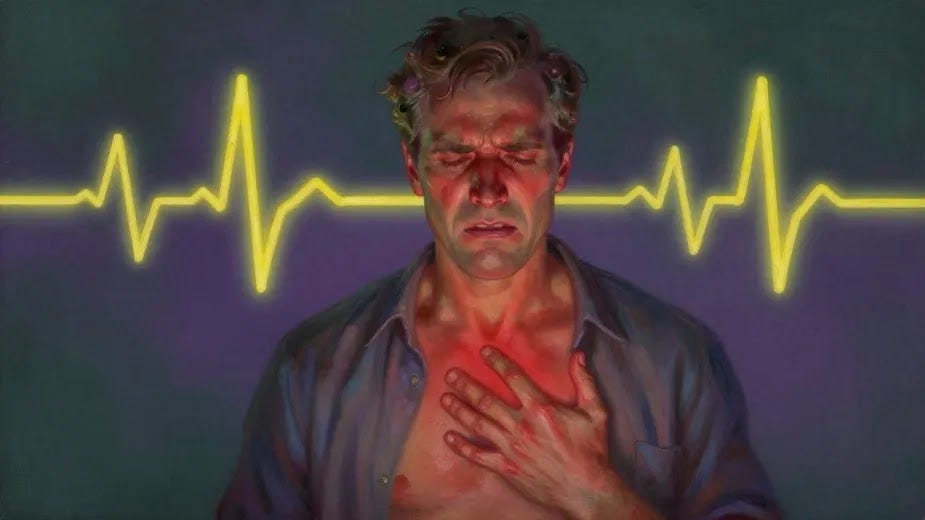
Chest pain confusion: distinguishing acid reflux from a cardiac emergency
From Burritos to ER: My GERD Journey
So, every time I felt that familiar burn in my chest, off to the ER I went. They’d run an EKG, check my vitals, and hand me what I came to know as “the cocktail” — a mix of the strongest antacids known to humankind. If the EKG was clean and the cocktail knocked out the pain, the verdict was usually the same: not a heart attack, just a very angry esophagus. And because of my history, they’d keep me for 24 to 48 hours “just to be sure,” even if the whole thing turned out to be nothing more than a bad burrito from a gas station.
After a few rounds of this, it became clear that avoiding GERD wasn’t just about comfort — it was about staying out of the hospital. My doctor prescribed pantoprazole (Protonix) to help prevent acid reflux and reduce the chances of those ER trips. It made a real difference, but it also opened my eyes to something bigger: heartburn isn’t harmless. It’s not “just indigestion.” And for many people, it can lead to serious health problems if it’s ignored.
Why Heartburn Deserves More Respect Than It Gets
Heartburn is incredibly common, but chronic acid reflux — known as GERD (gastroesophageal reflux disease) — can cause long‑term damage. Over time, repeated acid exposure can irritate and inflame the esophagus, interfere with sleep, trigger chronic cough, and in some cases lead to more serious complications.
For people with heart disease, GERD can be especially confusing because the symptoms overlap with cardiac symptoms. That overlap is why so many people end up in the ER “just to be safe,” and why so many others stay home when they shouldn’t.
GERD Isn’t Just a Nuisance — It’s a Condition Worth Managing
Taking heartburn seriously isn’t about fear — it’s about awareness. GERD can affect quality of life, disrupt daily routines, and create unnecessary medical scares. Managing it early can help reduce symptoms, prevent complications, and avoid those stressful “is it my heart or is it reflux?” moments.
Your digestive system and your heart may seem like they live in different universes, but when chest pain is involved, they become impossible to separate. That’s why understanding GERD — and treating it — matters.
❓ 2. Zero‑Volume FAQ — GERD & Heartburn
These are crafted to hit long‑tail, low‑competition search phrases.
1. Why does GERD chest pain feel so similar to heart attack pain?
GERD can irritate nerves shared with the heart, creating burning or pressure sensations that mimic cardiac pain.
2. Can GERD symptoms get worse after lying down even if you haven’t eaten recently?
Yes. Gravity no longer helps keep stomach acid down, so reflux can flare hours after a meal.
3. What is “silent reflux” and why do some people have GERD without heartburn?
Silent reflux affects the throat and airways more than the esophagus, causing hoarseness, cough, or throat clearing instead of burning.
4. Can long‑term untreated GERD affect sleep quality in older adults?
Chronic nighttime reflux can disrupt sleep cycles, increase awakenings, and worsen fatigue.
5. Why do some people with GERD feel chest tightness instead of burning?
Acid irritation can trigger esophageal muscle spasms, which create squeezing or pressure sensations.
GERD vs Heart Attack Chest Pain
🔥 GERD Chest Pain
Burning sensation behind the breastbone
Worse after eating or lying down
Improves with antacids
May include sour taste or regurgitation
Often linked to large meals or trigger foods
❤️ Heart Attack Chest Pain
Pressure, squeezing, or heaviness
May radiate to arm, jaw, neck, or back
Not relieved by antacids
May include shortness of breath or nausea
Can occur at rest or during activity
Chest pain should always be evaluated urgently in people with a history of heart disease.
My Gerd Gallery
Gut-Heart Connection: GERD and Microbiome Health Impact | Aging Health
Understanding the Role of a Gastroenterologist | Aging Health
Barrett's Esophagus: Understand the Risks and Treatments
🔵Primary Clinical References — GERD & Heartburn
🔥 Mayo Clinic — GERD Overview
Mayo Clinic. Gastroesophageal Reflux Disease (GERD): Symptoms & Causes. mayoclinic.org
🫁 Cleveland Clinic — GERD & Acid Reflux
Cleveland Clinic. GERD: Causes, Symptoms, and Management. clevelandclinic.org
📘 NIDDK — Digestive Diseases: GERD
National Institute of Diabetes and Digestive and Kidney Diseases (NIDDK). GERD. niddk.nih.gov
📑 American College of Gastroenterology — GERD Guidelines
ACG Clinical Guideline for GERD. gi.org
✔ National health authorities ✔ Digestive health specialists ✔ Evidence‑based guidelines