

Dementia: New Insights on Memory Loss and the Brain

Brain Health: Olive Oil, Better Sleep, and the Secrets of Superagers
Dementia is not a single disease; it is a term for a decline in mental ability severe enough to interfere with daily life. While Alzheimer’s is the most common type, new research shows that lifestyle choices—like the oil in your pantry and the quality of your sleep—play a massive role in how our brains age.
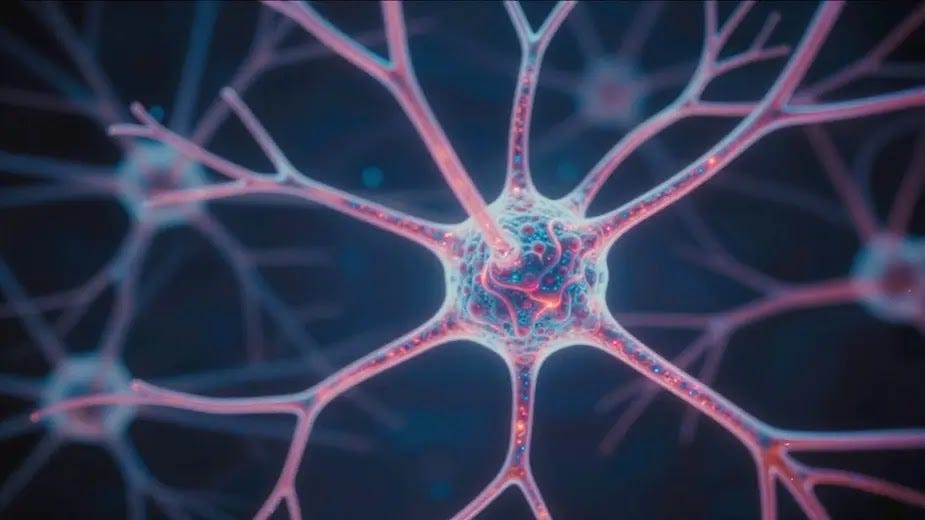
Understanding brain cell networks is crucial for revealing dementia mechanisms and enhancing cognitive health. By studying these neuron connections, researchers aim to identify factors that lead to cognitive decline and potential therapies. This knowledge could result in innovative strategies to prevent or alleviate dementia, improving the quality of life for affected individuals and their families.
🧠🧠🧠🧠
Olive Oil and Dementia Risk
A landmark study led by the Harvard T.H. Chan School of Public Health recently tracked over 90,000 adults for nearly 30 years. The findings were striking consuming just over half a tablespoon (7 grams) of olive oil daily was linked to a 28% lower risk of dying from dementia.
Simple Swaps for Brain Protection
The research suggests that you don't need a total diet overhaul to see benefits. Small substitutions make a difference:
The "5-Gram" Rule: Replacing just one teaspoon of margarine or mayonnaise with olive oil daily lowered dementia mortality risk by 8% to 14%.
Quality Matters: Extra-virgin olive oil (EVOO) contains the highest levels of polyphenols—antioxidants that act as a shield for your neurons.
Beyond the Heart: While olive oil is famous for heart health, this study found brain benefits regardless of the overall quality of the rest of the person's diet.
Understanding the "Clear Moments" Before Death
Families often report a "lucid period"—a sudden, unexpected return of memory and personality in a loved one with advanced dementia shortly before they pass away. This is often called Terminal Lucidity.
Scientists believe this happens due to late-stage chemical shifts. As the brain’s systems begin to shut down, a final surge of neurotransmitters may temporarily bypass damaged pathways, allowing a "last goodbye." While bittersweet, these moments are a reminder that the person’s true self remains beneath the disease.
The Hidden Stage: Asymptomatic Alzheimer’s
It is a common misconception that Alzheimer’s begins with a lost set of keys. In reality, the disease starts 10 to 20 years before the first symptom appears.
Preclinical Phase: Amyloid plaques and tau tangles (sticky proteins) begin building up. At this stage, a person will pass every memory test perfectly.
The Role of Biomarkers: Today, doctors can use PET scans or spinal fluid tests to see these changes early.
Genetic Factors: While genes like APOE-ε4 increase risk, they are not a guarantee of the disease.
Why Sleep is the Brain's "Car Wash"
During deep sleep, the brain activates a cleaning system (the glymphatic system) that flushes out metabolic waste. Obstructive Sleep Apnea (OSA) stops this process.
When breathing stops repeatedly during the night, oxygen levels drop. This "starves" brain cells and allows toxic proteins to accumulate. Treating apnea with a CPAP machine or dental device is now considered a primary way to prevent early-onset memory loss.
The Superager Phenomenon
"Superagers" are individuals in their 80s and 90s whose memory is as sharp as someone in their 50s. What is their secret?
White Matter Integrity: Their "brain wiring" remains insulated and thick, allowing fast communication between brain regions.
Slower Shrinkage: Everyone's brain shrinks with age, but Superagers' brains lose volume at about half the rate of their peers.
Social Vitality: Superagers tend to report strong, active social lives, which may act as "exercise" for the frontal cortex.
FAQ: Common Questions on Cognitive Health
1. Is olive oil better than coconut oil for preventing dementia? Yes. While coconut oil was once a "fad" for memory, large-scale clinical data strongly favors olive oil. Olive oil is rich in monounsaturated fats and polyphenols that directly reduce neuroinflammation, whereas coconut oil is high in saturated fats which can negatively impact cardiovascular health in some seniors.
2. Why are dementia rates higher in Black and Hispanic communities? According to the Alzheimer's Association, Black Americans are about 2 times more likely, and Hispanics are about 1.5 times more likely to have Alzheimer’s than older whites. This is often linked to higher rates of cardiovascular risk factors like high blood pressure and diabetes, as well as historic "health disparities" in access to early diagnosis.
3. Can you have "brain tangles" and still have a perfect memory? Surprisingly, yes. This is known as Cognitive Resilience. Some people’s brains show significant plaque and tangle buildup during an autopsy, yet they never showed symptoms in life. Researchers believe high education levels and mental stimulation help the brain build "back-up routes" to bypass damage.
4. Does snoring always mean I’m at risk for memory loss? Not always, but "heavy" snoring combined with daytime sleepiness is a red flag for Sleep Apnea. If you stop breathing for even a few seconds at night, your brain is deprived of oxygen, which is a known driver of cognitive decline.
5. Is a "moment of clarity" a sign that a patient is getting better? In the context of late-stage dementia, a sudden return of memory (Terminal Lucidity) is usually temporary and often occurs in the days or hours before death. It is not a sign of the disease reversing, but rather a unique physiological event at the end of life.
Citations and Research Sources
Dementia Mortality: Tessier AJ, et al. (2024). "Olive Oil Intake and Health Professionals Follow-up Study." JAMA Network Open.
Racial Statistics: 2024 Alzheimer’s Disease Facts and Figures, Alzheimer’s Association.
Superagers: Northwestern University Feinberg School of Medicine, Mesulam Center for Cognitive Neurology.
Sleep & Tau: National Institute on Aging (NIA), "Sleep and Alzheimer's Disease Link."
Terminal Lucidity: Archives of Gerontology and Geriatrics, Research on end-of-life brain activity.