

Craft a Safe, Effective Exercise Plan for Your Goals

Craft a Safe, Effective Exercise Plan for Your Goals
A clinically guided approach to movement, strength, and balance for older adults . By blending medical knowledge with real‑world application, older adults can improve mobility, confidence, and reduce fall risk.
Medical Disclaimer: This content is for educational purposes only and does not replace professional medical advice. Always consult a qualified healthcare provider.
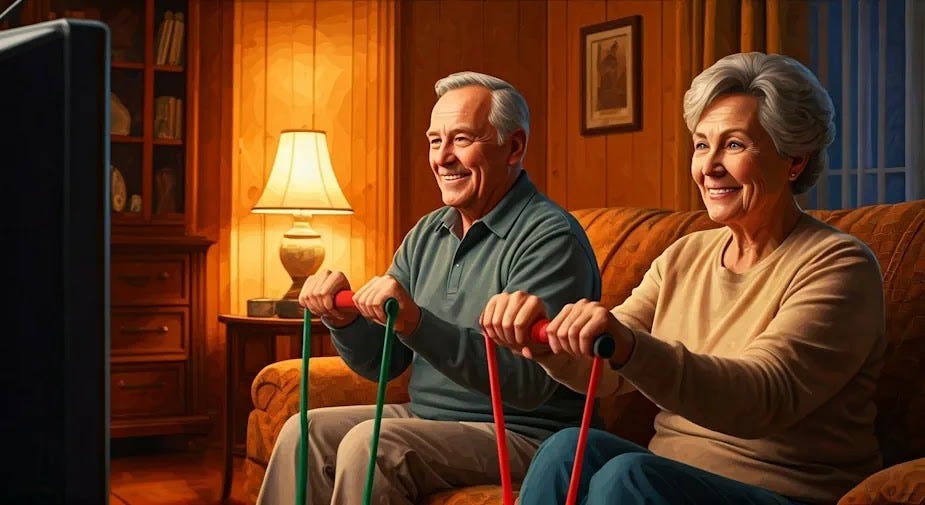
Gentle resistance band exercise for older adults in a safe home environment.
Why Exercise Matters More With Age
Regular physical activity helps older adults maintain independence, improve sleep, protect brain health, and reduce the risk of falls, heart disease, diabetes, and dementia.
Step 1: Clinical Self‑Assessment
Review medical conditions (heart, joint, balance, lung)
Check medications that affect blood pressure or hydration
Start slow — even 5–10 minutes is beneficial
Aerobic (Cardio)
Improves heart, lung, and brain health
Walking
Swimming
Chair aerobics
Strength Training
Preserves muscle and bone
Resistance bands
Light weights
Wall push‑ups
Balance Training
Reduces fall risk
Tai chi
Heel‑to‑toe walking
Standing leg lifts
Flexibility
Improves comfort and range of motion
Seated stretches
Yoga
Shoulder rolls
Recommended Weekly Targets
150 minutes of moderate aerobic activity
Strength training 2 days per week
Balance exercises 3+ times per week
Senior‑Friendly Weekly Exercise Plan
Monday: 20‑minute walk + balance drills
Tuesday: Chair stretching + resistance band arms
Wednesday: Rest or gentle yoga
Thursday: Walk + wall push‑ups
Friday: Seated strength + mobility
Saturday: Optional swim or tai chi
Sunday: Rest or light stretching
Safety First — Red Flags
Chest pain or pressure
Dizziness or fainting
Sudden shortness of breath
Joint pain that worsens
Key Clinical Takeaways
Exercise supports healthy aging when done safely
Consistency matters more than intensity
Even 10 minutes daily provides benefit
Always individualize plans with a clinician
Conversation Starter:
“I’m building an exercise routine and would like your guidance to ensure it’s safe for my health conditions.”
Case Study: My 2008 Heart Attack Survival Story and the Diabetes Link.
To see how I am connecting these dots, read my latest research on Is Alzheimer’s Really Type 3 Diabetes?
The Log: Start tracking your "Mental Clarity" score on my Daily Glucose Tracker.