

The Arthritis Diet: What to Leave Off Your Plate

The Arthritis Diet: 8 Foods to Leave Off Your Plate for Joint Relief
By Tommy T Douglas | Updated February 2026
Arthritis impacts over 58 million adults in the United States. While there is no "magic cure" diet, extensive research demonstrates that nutrition plays a significant role in managing systemic inflammation and reducing the frequency of painful flare-ups. Understanding what to remove from your plate is often the most critical first step.
Medical Disclaimer: This content is for informational and educational purposes only. It does not replace professional medical advice, diagnosis, or treatment. Always consult a qualified healthcare provider regarding any medical condition.

Small dietary changes can make a big difference in managing joint pain. Focus on fresh, whole foods to soothe inflammation.
Tommy’s Take: As someone who quit smoking 7 years ago to manage my own health, I learned that systemic inflammation is a "total body" effort. Just as I wish I’d quit smoking sooner, many patients find that they wish they had addressed these dietary triggers years earlier. Your joints are living tissue—give them the right environment to heal.
Key Takeaways
Refined triggers: Added sugars and fried foods are the most common causes of immediate flare-ups.
Personal Bio-individuality: Reactions to nightshades and dairy vary; tracking your symptoms is essential.
The "Long Game": Reducing red meat and alcohol protects joint cartilage over years, not just days.
What to Leave Off Your Plate
🥩 1. Red and Processed Meats
Red meat is high in saturated fats and Advanced Glycation End Products (AGEs)—compounds that stimulate inflammation and can damage joint tissues. Processing meats (like bacon or deli cuts) adds nitrates and excessive sodium, doubling the inflammatory load.
Better choices: Beans, lentils, and fatty fish like salmon or mackerel.
🍩 2. Added Sugars and Sweetened Drinks
Excess sugar triggers the release of inflammatory cytokines. Furthermore, the weight gain associated with high-sugar diets puts literal mechanical stress on weight-bearing joints like knees and hips.
Better choices: Sparkling water with lime, or antioxidant-rich berries.
🍟 3. Fried and Ultra-Processed Foods
Fried foods are often cooked in omega-6-heavy oils (like corn or soybean oil) at high temperatures, creating oxidized fats that are highly irritating to the immune system.
Better choices: Air-fried vegetables or roasted nuts.
🧂 4. Excessive Sodium
High salt intake causes the body to retain water, which can increase the pressure and swelling within joint capsules. Check labels on canned goods and frozen meals, which are hidden salt traps.
Better choices: Fresh herbs, lemon juice, or "no-salt-added" seasonings.
🍺 5. Alcohol (Especially Beer)
Alcohol is a toxin that the liver must prioritize, often causing a spike in uric acid. This is particularly dangerous for those with Gout. Beer, specifically, is high in purines.
Better choices: Herbal teas or magnesium-infused "mocktails" for relaxation.
🍞 6. Gluten (On a Trial Basis)
While not everyone is sensitive, those with autoimmune arthritis (like RA) often find that the proteins in wheat can mimic other triggers in the body, leading to "leaky" gut-related inflammation.
Better choices: Quinoa, wild rice, or buckwheat.
🍅 7. Nightshades (Case-by-Case)
Vegetables like tomatoes and peppers contain solanine. While the Arthritis Foundation notes that evidence is mixed, many seniors report a "heavy" feeling in their joints after eating them.
Better choices: Leafy greens, carrots, and sweet potatoes.
🦐 8. High-Purine Foods (Gout Focus)
For those prone to gout, organ meats and certain shellfish (shrimp/scallops) can cause uric acid crystals to form in the joints, leading to intense, needle-like pain.
Better choices: Plant-based proteins and low-fat dairy.
✅ What to Eat Instead: Anti-Inflammatory All-Stars
Focus on a Mediterranean-style approach. High-quality Extra Virgin Olive Oil, walnuts, chia seeds, and leafy greens provide the polyphenols your body needs to "cool down" the inflammatory fire.
✅ What to Eat Instead: Anti‑Inflammatory All‑Stars
To complement the “avoid” list, numerous foods have been consistently identified as effective in reducing inflammation.
Fatty fish rich in omega‑3 fatty acids, such as salmon and mackerel, help lower inflammatory markers in the body.
Berries, packed with antioxidants, contribute to reducing oxidative stress.
Leafy greens provide essential vitamins and minerals that support immune function.
Olive oil, particularly extra‑virgin, contains compounds with strong anti‑inflammatory properties.
Nuts and seeds offer healthy fats and fiber, while whole grains supply important nutrients and promote digestive health.
Beans and legumes are excellent sources of plant‑based protein and beneficial phytonutrients.
According to The Cleveland Clinic , following an anti‑inflammatory diet that includes these foods can help ease arthritis symptoms and promote overall well‑being.
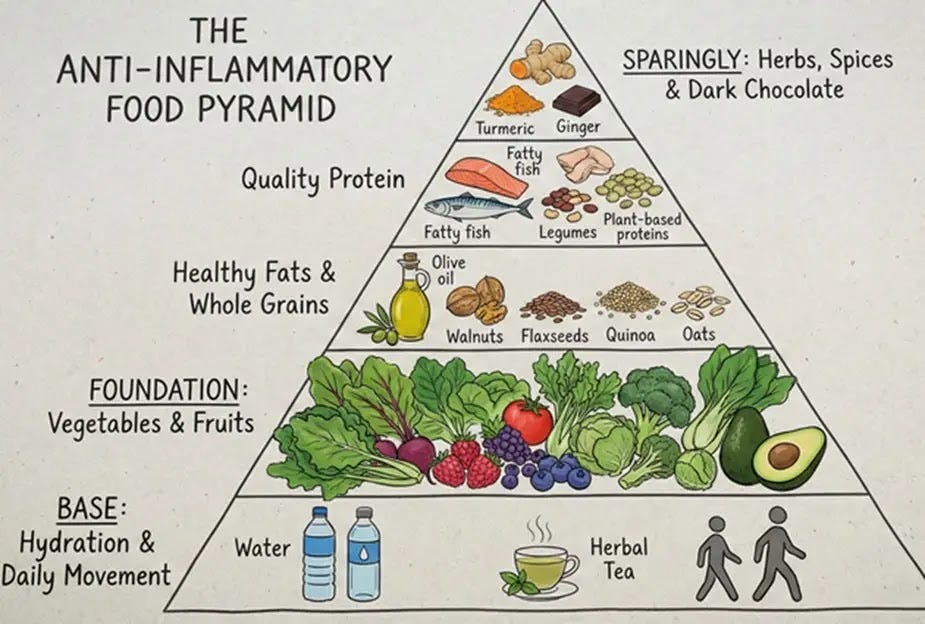
The Anti-Inflammatory Food Pyramid: Focus on a foundation of hydration and colorful produce, while using healthy fats and quality proteins to support joint repair and reduce systemic swelling.
Frequently Asked Questions
Why do tomatoes make my arthritis flare even though they’re healthy?
Some people report sensitivity to nightshade vegetables like tomatoes, but responses vary.
Does cutting out sugar really help joint pain?
High-sugar foods may worsen inflammation for some individuals.
Why do my joints hurt more after eating bread or pasta?
Refined carbohydrates can affect inflammation in some people.
Are seed oils bad for arthritis?
Some people report symptom changes with certain oils, but evidence varies.
Does dairy make arthritis worse?
Reactions to dairy differ widely. Some people notice increased stiffness, while others do not.
Why do processed meats make my joints feel swollen?
Processed meats can contain additives and high sodium levels that may affect inflammation.
Is alcohol a trigger for arthritis flare-ups?
Alcohol can affect inflammation and hydration, which may influence symptoms.
Do artificial sweeteners cause joint pain?
Some individuals report sensitivity to certain sweeteners, but responses vary.
Why do fried foods make my arthritis feel worse?
Fried foods can contain fats that may influence inflammation in some people.
Can cutting out ultra-processed foods help arthritis symptoms?
Some people notice improvements when reducing highly processed foods.
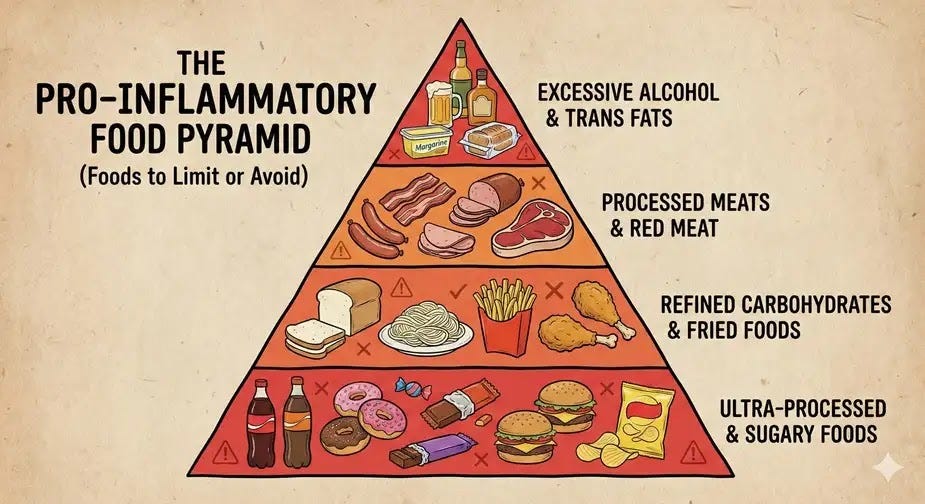
The Pro-Inflammatory Food Pyramid: A visual guide to the primary dietary triggers that can exacerbate systemic inflammation. Prioritizing the reduction of ultra-processed sugars, refined grains, and certain fats can help stabilize the body's inflammatory response.
Glossary: Arthritis Diet Terms
🍅 Nightshades
A group of vegetables including tomatoes, peppers, and eggplants that some people report sensitivity to.
🍞 Refined Carbohydrates
Processed grains like white bread and pasta that may affect inflammation for some individuals.
🍬 Added Sugars
Sugars added during processing that may influence inflammation in some people.
🌻 Seed Oils
Oils such as soybean, corn, and sunflower oil that some people believe affect inflammation.
🧀 Dairy Sensitivity
A reaction some people experience to milk or cheese that may affect joint symptoms.
🥓 Processed Meats
Meats preserved with salt or additives that may influence inflammation.
📦 Ultra‑Processed Foods
Highly processed packaged foods that some people find worsen arthritis symptoms.
⚗️ Artificial Sweeteners
Low‑calorie sweeteners that some individuals report sensitivity to.
🔥 Inflammation
The body’s natural response to injury or irritation, which can affect joints.
🚫 Trigger Foods
Foods that may worsen symptoms for some individuals with arthritis.
``
A Pro-Tip for "Aging Health" Readers
Don't try to overhaul your entire kitchen in one afternoon. Much like my journey quitting smoking, success comes from consistent, small choices. Start by removing one item from this list for two weeks and see how your morning stiffness feels. Your body has a remarkable ability to heal when you stop giving it reasons to fight.
📘 Related Patient Resources
The Log: Start tracking your "Mental Clarity" score with my Daily Glucose Tracker .
The Foundation: New to this? Read my Beginner’s Guide to Diabetes .
Liver Health: How metabolic syndrome impacts liver cirrhosis .